On luck, showing up, and the people we almost don’t meet
This week, a stranger joined one of my masterclasses on a whim. By Friday, she'd launched …
5 min read
While cleaning my living room for an event, I picked up a notebook. Instead of putting it away, I left it where I journal every morning. Here's the thing: I opened the notebook after creating all the assets for the release of this guide, after deciding not to talk about 2016. And serendipity tapped me on the shoulders, asking me to... redirect my course! You really can't make this stuff up.
"Fix your course to a star and you can navigate through any storm."
If you've been on social media lately, you've probably seen the 2016 trend, with people sharing where they were ten years ago.
I wasn't planning to participate. My ego was liking the idea, but any slide show I’d put together would be telling a very partial story of what happened that year. Bluntly, I could show you fancy events, glamorous holidays, shoe-fies (selfies of well clad feet), front row fashion show images, and yes, despite the obvious story of external success, life was also miserable. Holding the paradox feels a hard balance for Instagram. So I let it go.
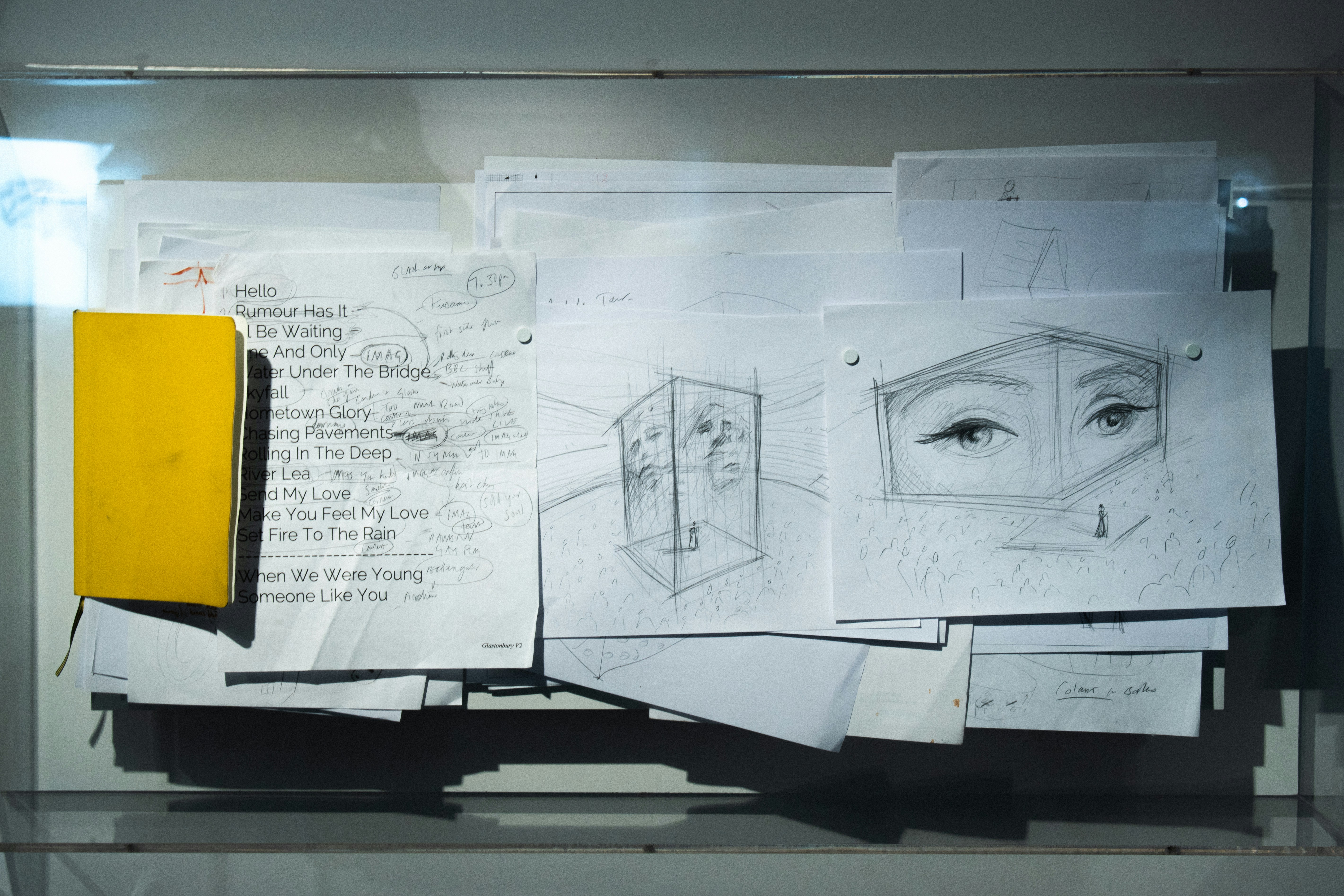
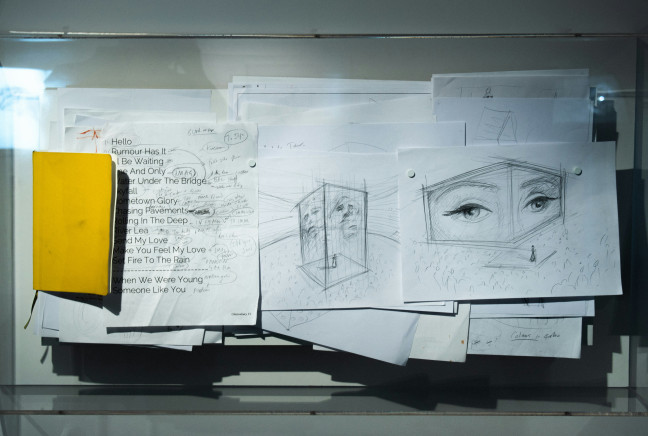
But serendipity intervened. The other day, while cleaning, I picked up an old yellow notebook. Instead of putting it away, I set it next to my current journal. I knew it was the one I used back in … 2016.
Here's the thing: I'd already finished creating all the assets for something I'm releasing this week, a wayfinding guide about orientation and redirection. I'd decided the 2016 trend wasn't for me.
And then the notebook appeared. As if to say: here's your in. A few days later, I opened it at random, and what did I find?
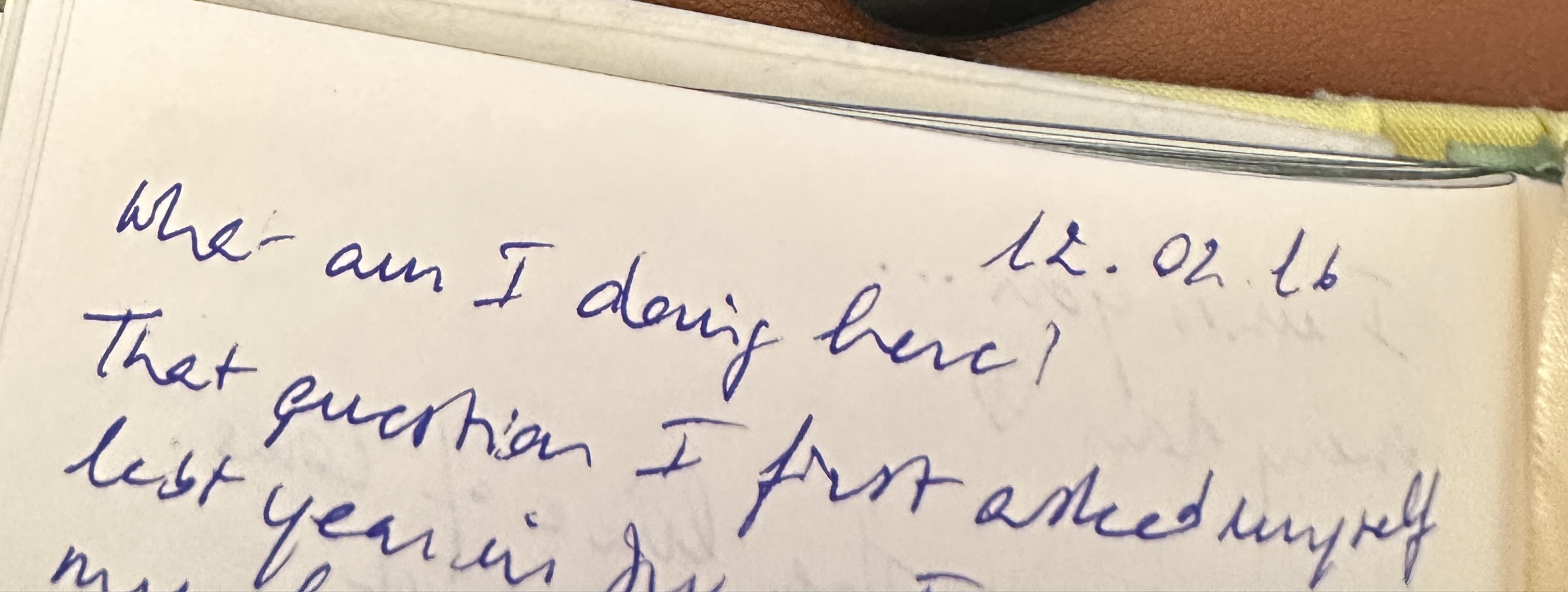
I remember that version of me. I remember that moment, almost exactly. Confused. Searching for answers. Anxious. Looking a little for someone, or something, to blame (maybe myself).
That “What am I doing here?” was an echo of an earlier “why.” “Why am I here??” That interrogative adverb has a particular energy. Maybe you can feel it? Here it feels defensive, exhausted, a little victimised. Like being lost at sea and demanding to know whose fault it was.
Ten years later, I find myself asking a different question:
Where am I?
Not searching for fault. Not demanding answers. Just... orienting. With curiosity. Looking around at what's here, what's been, what's possible.
It's the difference between drifting and taking the helm.
For years, when I sensed discomfort, I fixated on the outer conditions (the job, the city, the look). If I make that better, then this will feel better. Not totally without merit, except that sometimes, this strategy feels like rearranging the garden furniture in the middle of a storm. What I was refusing to do was look at the inner conditions. The inner weather.
"Where am I?" helped me turn me inward. Not to blame myself, but to see myself. Moving from why to where, invites a shift. Like moving from passenger to captain. No longer blaming the waves, but learning to steer the ship.
No longer life’s passenger, but a navigator; not drifting but reading the stars, charting a new course.
This shift from why to where is at the heart of this guide I've been working on.
Your Story, Your Map is a contemplative wayfinding tool to help you orient yourself, especially when life feels uncertain, when you need to find your barings or you've lost sight of where you're heading.
It draws on an ancient practice: wayfinding, or the art of navigating by reading your environment rather than following a fixed map or tools. Polynesian navigators crossed vast oceans using only the stars, the waves, the flight patterns of birds. No charts. Just presence, attention, a deep atunement to themselves and their surroundings.
The guide invites you to explore this for yourself, inwardly:
Remind yourself of where you want to go
Review where you've been (without judgment)
Explore what truly matters
Orient yourself before deciding what's next
And gently chart a course forward, even without a clear destination
We're all going to feel lost at some point. Adrift. That's simply inevitable. But we can learn to read our inner environment, just as we explore our external conditions, to evaluate how to get to what matters most.
Maybe you know where you want to go but feel disconnected from your path. Or maybe, like me in February 2016, you're not sure about the destination at all.
This works for both. And if you're feeling unmoored not just by your own life, but by everything happening in the world right now, this works for that too. Connecting to what matters is always an anchor.
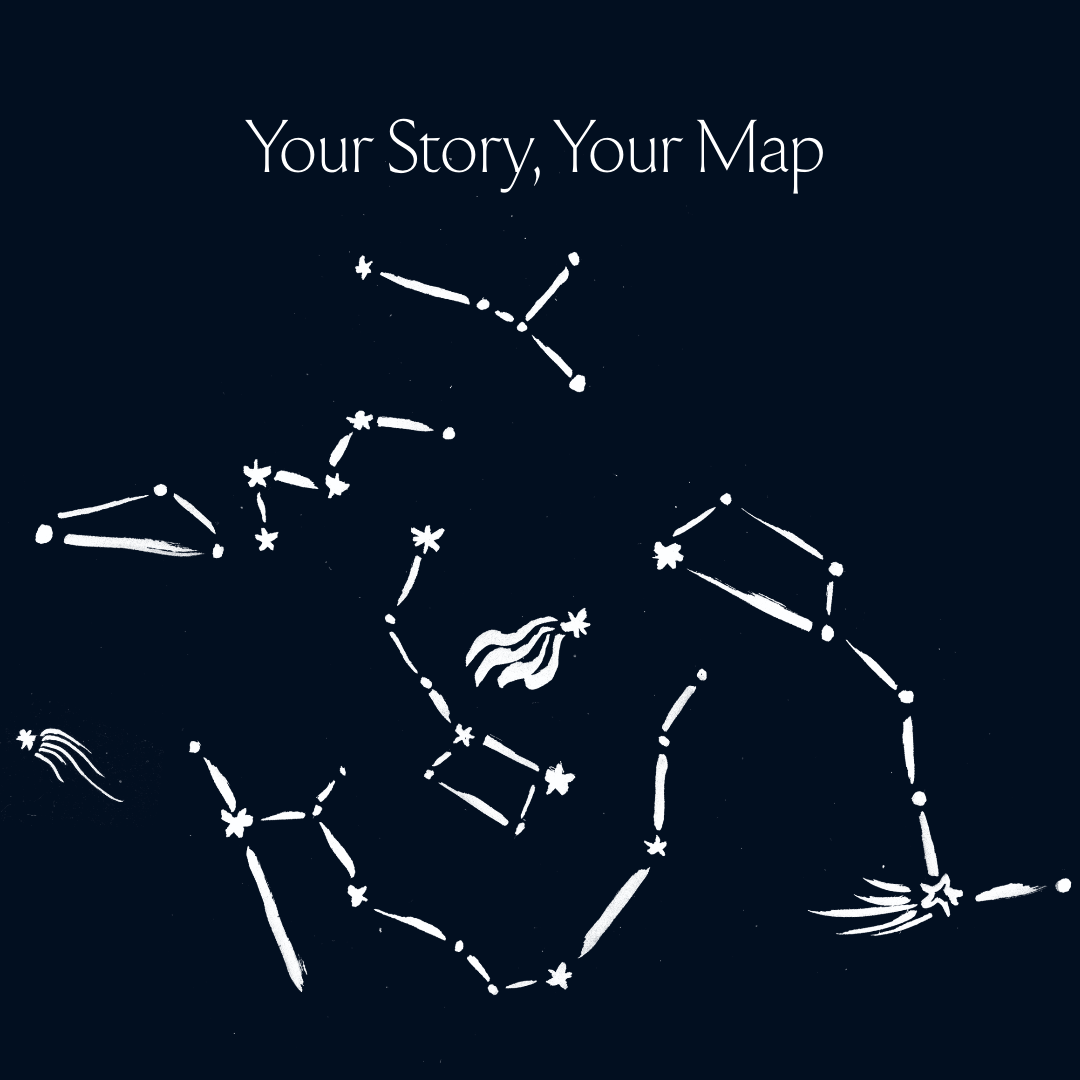
What you'll receive:
The Guide — a short ebook on wayfinding and self-orientation
The Worksheet — an editable PDF with journaling prompts
The Audio Version — my voice walking you through the guide (I recommend starting here)
Price: $35
I've chosen not to make this free, because I know myself: when I sign up for free things, I don't show up and don’t do the work. And while this work is simple, it’s not easy. It matters. I hope the small commitment calls you to spend real time with it.
Before getting into the essay, and while I'm talking about serendipity, on Wednesday we have a brand new online session with twice TED speaker (not TEDx!), author and love educator Francesca Hogi. Dear Franny, as she is known to her friends (and podcast listeners) is going to invite us to explore "How to be luckier, or the art of courting serendipity". You may think what does Francesca has to teach about luck? Well. She was on Survivor (the US reality show), twice. And was expelled first. Twice. That's a neat start, isn't it.
How does one court luck, then?
Come and and find out for yourself! Reminder, it's a pay what you can event (your commitment starts at $1) and if you can't make it, register and we'll send you the recording. My friend Sarah said I was unclear about this in the past, so I hope everyone is up to date. Register here or click on the image below.

A NOTE:
This guide is a tool for orientation, not a substitute for therapy or professional support. When I was asking "Why am I here?" back in 2016, I think I first needed rest, stable ground, before I could open to a better question. If you're in that place right now, please be gentle with yourself. Sometimes the most important first step is asking for help, not answers.
This week, a stranger joined one of my masterclasses on a whim. By Friday, she'd launched …
While cleaning my living room for an event, I picked up a notebook. Instead of putting it …
Some of my friends have found my business model a little strange. Podcasting at the heart …
