What are we seeking when we seek a creative life? with Paulette Perhach

From viral essays to nunchuck skits—embracing the full spectrum of creative expression
In this episode of The Mettā Interview, host Anne V Mühlethaler welcomes Paulette Perhach, a New York Times contributor, writing coach, and creator of the Writer's Mission Control Center software. Author of "Welcome to the Writer's Life" and two viral essays read by millions, Paulette brings her unique blend of humor, vulnerability, and business acumen to help writers build sustainable creative practices.
Paulette traces her writing journey from declaring her ambition at a bus stop at age 10 (where her best friend immediately warned her how hard it would be) to discovering Excel as "the brain I wasn't born with" during college. She reveals how her generalized anxiety disorder intertwined with undiagnosed ADHD shaped her path, leading her to meditation in her early twenties and eventually to creating A Very Important Meeting during COVID—a daily meditation-and-writing community that continues seven days a week.
Paulette also shares with Anne the nearing completion of her novel – a decade-long journey of writing and rewriting, along with the third iteration of her Writer's Mission Control Center software. As a late-diagnosed ADHD writer, she shares how creating structures and processes has become central to both her own practice and her teaching philosophy.
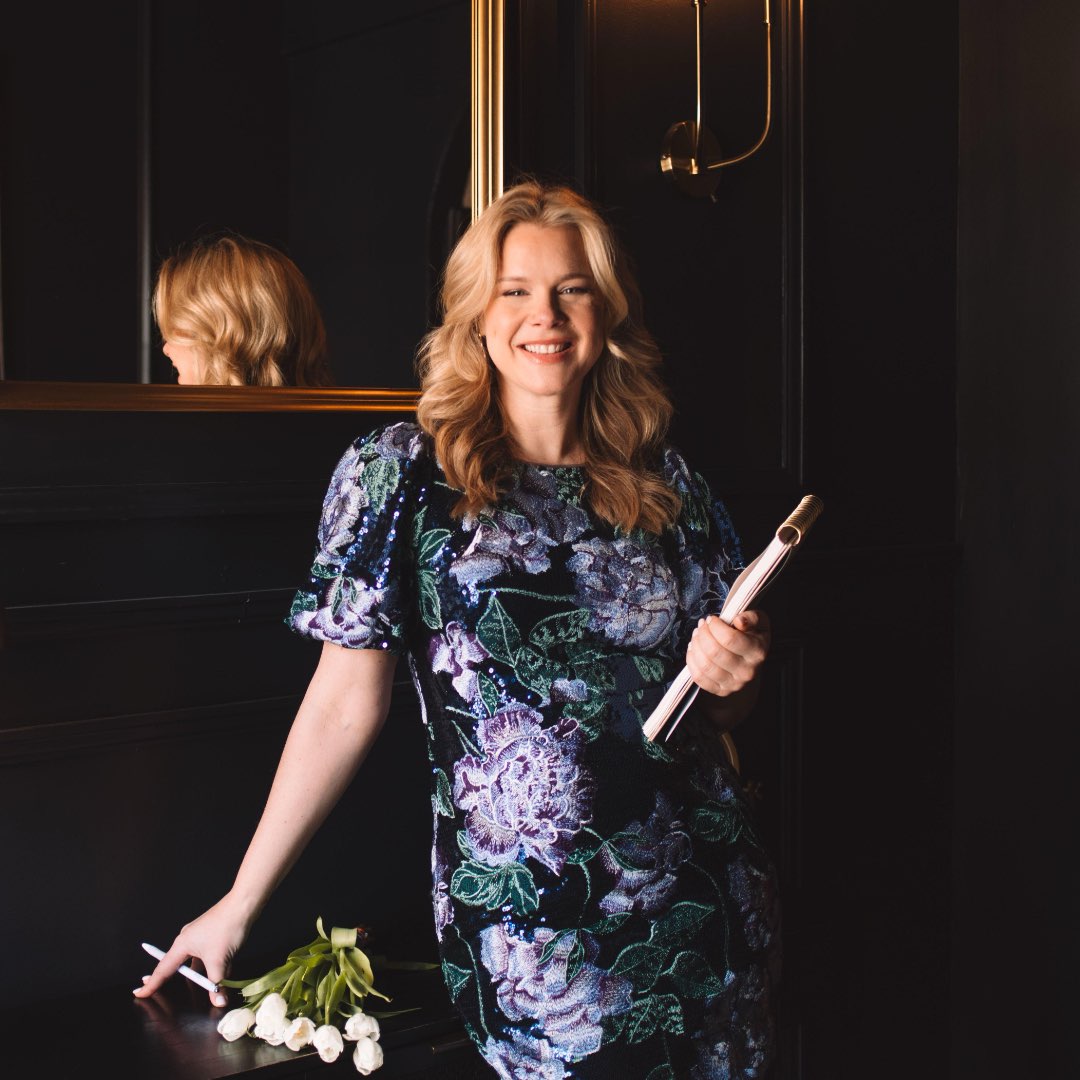
In exploring their central question, "What are we seeking when we seek a creative life?", Paulette explores a pivotal moment when business friends suggested she could make more money. She revisits other meaningful stories from her past, exploring how examples of freedom like spending a day in the sun, power up her desire not only for a creative life but one with flexibility. One made for enjoyment, not just work.
Paulette touches on her father's death when she was a teenager, a revelatory moment under South American moonlit sky, and her ongoing dance between caring about Instagram likes and seeking profound human connection. Paulette explains her recent embrace of performance — from her viral "Trauma Kitchen" skit to upcoming nunchuck comedy — as something that represents her decision to remove artistic molds and let creativity flow wherever it wants.
A conversation that brilliantly captures the tension between artistic calling and economic reality, offering both practical wisdom and philosophical depth for anyone navigating the creative life, all that delivered with honesty and humour.
Happy listening!

Listen to the Metta Interview on your favorite podcast platform
CONNECT WITH PAULETTE
CONNECT WITH ANNE V
CONNECT WITH LE TRENTE
Website: https://PaulettePerhach.com
Instagram: https://www.instagram.com/paulettejperhach/
Powerhouse Writers: https://www.powerhousewriters.com/
Welcome to the Writer's Life newsletter: welcometothewriterslife.com
Writer's Mission Control Center software: https://www.writersmissioncontrolcenter.com/
Paulette's Work:
Book: "Welcome to the Writer's Life" (Sasquatch Books/Penguin Random House)
Viral essay: "A Story of a Fuck Off Fund" (anthologized in "The Future is Feminist")
Regular contributor: The New York Times, Vox, Elle, The Washington Post, Slate
The Trauma Kitchen skit on Paulette’s Instagram
Website: AnneVMuhlethaler.com
LinkedIn: linkedin.com/in/anne-v-muhlethaler
Instagram: @annvi
BlueSky: @annvi.bsky.social
LinkTree (events & free Metta course): LinkTree.com/annvi
The Mettā Interview:
Website: LeTrente.com/the-metta-interview
Spotify
Apple Podcasts
YouTube
Full transcripts and show notes: letrente.com/the-metta-interview
The Mettā View newsletter: themettaview.com
Newsletter signup: letrente.kit.com/metta-view
Le Trente:
Website: LeTrente.com
LinkedIn: linkedin.com/company/le-trente
Instagram: @le_trente_studio
Event calendar: Luma.com/LeTrente
Full episode transcript
Paulette Perhach on the Metta Interview Podcast
[00:00:00]
[00:00:06] Hi, hello and welcome to the Metta interview. I am so excited for this brand new episode Today I'm going to be joined by Paulette Perhach. Paulette is a regular contributor to the New York Times, and her work has appeared among other places in Vox l, the Washington Post Cosmopolitan, glamor, Mary Claire, et cetera, et cetera.
[00:00:32] She's the author of two multimillion reader viral essays. That's quite something. She published a book in 2018 with Penguin Random House, called Welcome to the Writer's Life.
[00:00:47] She blogs about what it's like to write, to be a writer, to be a writing coach at Welcome to the Writer's life.com. She also leads guided meditations and writing [00:01:00] sessions through a wonderful group, which is how I met her, called a very important Meeting, which funnily enough.
[00:01:08] Becomes abbreviated as a vm, and my initials are a VM, so I feel like there's a kind of connection there. Paulette, most importantly, is a writing coach. She supports writers of all kinds figure out how to make a life and a career out of writing. We met in 2020, I want to say, or was it 2021? As I had met her co-founder, April Davila, who was then running A Very Important meeting online, I had the pleasure to join them first as a member of the community. I joined their online sessions as I was trying to develop my own writing practice, and then I started to support her, sometimes subbing when she's not available.
[00:01:52] We had the pleasure to meet in person a couple of years ago. In Barcelona, Spain of all places, and she has been [00:02:00] a guest on my longform interview podcast Out of the Clouds. Today. I'm excited to talk to Paulette about her big question, and I'm delighted to be introducing her to you.
[00:02:11] So without further ado, let's get started.
[00:02:14] Anne Mühlethaler : Paulette, I'm so happy to see you.
[00:02:16] Anne Mühlethaler : Welcome to the Metta interview. Thanks so much for having me. It's really exciting 'cause I've had you on Out of the Clouds. I almost slipped and used the wrong podcast title. Hopefully this is going to be a, a slightly different format and a fresh interview for anyone who's already met you and heard about you on, on Out of the Clouds.
[00:02:37] Anne Mühlethaler : So, before we dive into the broader topic and, and the question that feels alive for you at the moment mm-hmm. I'd love to ask you to get started by telling me what feels exciting, or making you smile at the moment.
[00:02:53] Paulette Perhach: My novel is really kind of almost done getting really, really close to done. It's in that.[00:03:00]
[00:03:00] Paulette Perhach: Stage where I'm like, oh no, this is gonna live. Right? It is a novel at this point and now I just need to make it a little bit better of a novel and it's like almost done. So, and that is more than 10 years of back and forth and writing and rewriting and starting over. And so that's really exciting. And same thing with my software for writers, the Writers mission control center.
[00:03:23] Paulette Perhach: We have a third version coming out and this is the first one that feels like it is now a piece of software and like a really, not in a way where I'm like, sorry, we're just like, you know, I'm just bootstrapping it, whatever. So, you know, someone told me, if you're gonna do a lot of things, it's gonna take you a long time to get them done.
[00:03:39] Paulette Perhach: If you focus and do one thing at a done time, you'll get it done faster.
[00:03:42] Paulette Perhach: Mm-hmm.
[00:03:43] Paulette Perhach: You know, I'm 43. This is kind of the culmination of doing a lot of things at once for a long time. It's like now I've been alive a long time, but those things are actually like becoming realities. So
[00:03:54] Anne Mühlethaler : that's been my path.
[00:03:56] Anne Mühlethaler : That's amazing. That's so exciting. I actually haven't yet [00:04:00] tried the Writer's Mission Control center, but I can't wait. Yay. Yeah, it's really fun. So I've already recorded a, a short introduction, but mm-hmm. Would you kindly introduce yourself in your own words so that, uh, our listeners can get a feel for who you are and for what you do?
[00:04:17] Anne Mühlethaler : Yeah.
[00:04:17] Paulette Perhach: I am a writer and writing coach and founder of the Writer's Mission Control Center software, which is basically the way that I handle everything around being a writer and keeping me going. I'm a late diagnosed ADHD writer, so I've only known since I was 38 that I have ADHD. And so, really. That's been a journey, as the kids say, to create the structures around that, which is a lot of the reason that I teach organization and processes to writers, which is not like the most fun topic, but I find that it leads to the most fun, right?
[00:04:54] Paulette Perhach: You can't. Sit down and immerse yourself in your writing without knowing like, yes, this time is safe. [00:05:00] Mm-hmm. So I teach people how to have the productive writing life they want that is actually completing things. I've had more than a hundred pieces published. I'm a regular in the New York Times, I've been in El Marie, Claire Cosmo, and I look back and I'm like, I made it happen despite being diagnosed with A DHD, so I can help other people make it happen, who maybe don't even
[00:05:22] Anne Mühlethaler : have aaDHD
[00:05:23] Anne Mühlethaler : yeah. And tell us a bit about how you got started with a very important meeting, because that's how you and I met in the first place. Mm-hmm. Back in 2021, I wanna say. Mm-hmm. Jan.
[00:05:36] Paulette Perhach: So it was a really beautiful moment during COVID where I was in self pity city, which I think a lot of us were.
[00:05:46] Paulette Perhach: And I had some other things going on in life that made it an even worse time for me. Mm-hmm. And. I wallowed and then I was like, okay, can I use this to help anyone else? I don't even know. Like I [00:06:00] literally probably was just like face down the floor and I was like, please use your life force for some kind of good right now.
[00:06:08] Paulette Perhach: And I said, you know, nobody's writing every, everyone's focus is all over the place trying to figure out if we should be spraying Windex on our vegetables as we come in from the grocery store and everyone is alone. Mm-hmm. So I said, let's create something where we get together online, we have a 10 minute meditation to calm you and focus you.
[00:06:29] Paulette Perhach: We all write together. We say hi at the end, and then I'll see you tomorrow. Mm-hmm. So that is how a very important meeting started. We now are seven days a week and we have people who've been there for five years now, which is so cool.
[00:06:43] Anne Mühlethaler : Yeah. It's so cool. It's a lovely community.
[00:06:46] Anne Mühlethaler : Thank you. Yes. I remember some of your regulars that, that have, I don't know that I've asked you this before, but how did you get into mindfulness and meditation and when did you make the connection between [00:07:00] mindfulness and, and the practice of writing? Mm-hmm.
[00:07:03] Paulette Perhach: Well, I, I don't know where my generalized anxiety disorder, stops and my A DHD begins.
[00:07:09] Paulette Perhach: Uh, I think they are commingled within me. Mm-hmm. But I had terrible anxiety when I was young, and now I currently have managed anxiety that comes and goes. And so I think just looking for answers of why, why is it so hard for me to just be, how can I calm myself? And so. Probably when I was about my early twenties, just kind of finding meditation, looking for answers I didn't even know to label it anxiety, you know, and that's, it's funny 'cause my novel is based on two characters that both have terrible anxiety.
[00:07:48] Paulette Perhach: The word anxiety does not show up in the novel once.
[00:07:51] Paulette Perhach: Mm-hmm.
[00:07:51] Paulette Perhach: They just are this mess of symptoms that I can look back and see the pattern, but they have no idea. Mm-hmm. Life just feels terrible. [00:08:00] And that to me was like, that was one of the, the answers that I was looking for.
[00:08:06] Anne Mühlethaler : That's amazing.
[00:08:07] Paulette Perhach: Yeah. Do you ever have like a cat hair on the tip of your nose? What's happening to me right now?
[00:08:11] Anne Mühlethaler : Okay. I
[00:08:12] Paulette Perhach: think I got it.
[00:08:12] Anne Mühlethaler : It's like a
[00:08:13] Paulette Perhach: cat hair. Well that
[00:08:13] Anne Mühlethaler : can happen to me very easily 'cause cats are coming and going in front of this microphone. Okay, I think I got it. I am so grateful that you speak about this and that you describe it in the novel, but the word anxiety is not used.
[00:08:28] Anne Mühlethaler : Mm-hmm. Because it's true. We can experience the symptoms and not really have any understanding of what it is that we're going through. Yeah. I
[00:08:35] Paulette Perhach: call it emotional hallucinations. Hmm. You know, people say like, oh, you're anxious about what? Good question. Yeah. It's just the feeling of like, if someone said, sit down, I have something terrible to tell you.
[00:08:49] Paulette Perhach: Like and cut to like what your stomach would feel like in that moment. That's the feeling I used to wake up with most mornings before I got on medication.
[00:08:58] Anne Mühlethaler : Wow. [00:09:00] Awful. Well if we travel back in time though, to your childhood in particular, is there a memory that still makes you smile? Oh yeah. Something that lights you up when you think about it.
[00:09:13] Paulette Perhach: Yeah, a lot of memories. Anything in particular about writing? About Yeah. Anything? Oh God. My dad was just like the silliest person in the world, so, you know, his silliness was always so appreciated and, and so fun and yeah, just the general family goofball ness, you know? And that feeling of closeness with family.
[00:09:36] Anne Mühlethaler : Hmm. That sounds gorgeous. Mm-hmm. At which point in your life did you realize that you wanted to become a writer? Was this something that was innate? Were you writing as a kid?
[00:09:46] Paulette Perhach: Yeah. I told my best friends at the bus stop when I was 10 years old that I wanted to be a writer. And my best friend said, do you have any idea how hard that is?
[00:09:55] Paulette Perhach: And we're still friends. So whenever, whenever I'm complaining, I'm like, you warned me 30 years ago [00:10:00] you told me, don't do it.
[00:10:01] Anne Mühlethaler : Are you guys still close?
[00:10:02] Paulette Perhach: Mm-hmm.
[00:10:03] Anne Mühlethaler : Oh, that's awesome. And what'd you think this stemmed from? Did you, was there an image of writers? Um, in your life? Is it tv? Was this, did you know writer growing up?
[00:10:15] Anne Mühlethaler : I
[00:10:15] Paulette Perhach: mean, I loved to read, I loved Shell Silverstein. I loved r Stein. You know, I did not read any of the girly stuff.
[00:10:23] Paulette Perhach: Mm-hmm.
[00:10:23] Paulette Perhach: The Little House in the Prairie. I didn't read Babysitters Club. No. I was like, gimme Fierce Street, gimme Christopher Pike. Um, I don't really know why I don't read horror now. It's so funny.
[00:10:34] Paulette Perhach: And there some, I'm best friends with two sisters. Their grandmother was a really successful romance novelist who didn't start until her sixties, Connie Mason. And she was on 48 hours. Like, she was very successful. So to see an actual person be like, I am a writer. I mean, that's, that's huge. I think Edward P. Jones, I have a quote from him in my book about how he, he's like, I didn't, I didn't know any writers growing [00:11:00] up, you know, so if you just think these books come from like a writer. You know, but I'm like, oh, that lady making potato salad over there. She writes books. She's a writer. So that, I think that's always, that's still something I try to bring to my work as a, like, public writer is like this. Like, no, I still just like got spinach in my teeth and like, you know, I'm just a person going through the world.
[00:11:23] Anne Mühlethaler : Yeah. That's amazing. Yeah. I feel like, I don't know a single person who's a writer. I mean, from when I was little, mostly doctors, scientists, a lot of those around. Mm-hmm. I mean, no, I mean, my parents were friends with a Nobel Prize winner in physics who did write a book, but I mean it That's impressive.
[00:11:44] Anne Mühlethaler : It was about physics stuff. Yeah. Not something I could relate to. Um, as you know, the aim with the Metta Interview is to shine a light on our multifaceted selves. And so [00:12:00] that's why I am going to, to ask you. This following question, and I understand how you became a writer. Mm-hmm. But what would you say was an early experience that got you to becoming a writing coach or also a software developer?
[00:12:18] Paulette Perhach: So, you know, the thing that made me a writer, I remember being, you know, I had all these big feelings and I would write them down and feel so much better. And that feeling kind of was echoed in the software of, well, in college I took personal software classes. It was, long story short, they were like an elective that was convenient.
[00:12:42] Paulette Perhach: And I took three semesters of Excel classes. So I knew our teacher told us, you know, more than 99% of people about Excel. My final project was a business plan that was 200 pages when it was printed in Excel. Wow. So, and I, not knowing I was undiagnosed with A DHD, the [00:13:00] joke I made at the time was. Excel is the brain I wasn't born with.
[00:13:03] Paulette Perhach: Mm.
[00:13:04] Paulette Perhach: Just like, oh my God, it has things stay in place. It can do math, it has insights that is not my brain. And so then I started taking, writing seriously after college and I was like, Hey, how is everyone organizing this? Like, where do we have, do you have like a list of all your story ideas? Where are you keeping track of your submissions?
[00:13:25] Paulette Perhach: How are you managing this or this? And everyone was like, Ooh, it's like a rat's nest. I have no idea. Like, everyone seems stressed out about their writing life and like how it's going and managing it. And so I made it for myself, uh, as a spreadsheet 10 years ago. Mm-hmm. In 2015. And then started kind of like selling it as a, you know, just like a $20 spreadsheet set up.
[00:13:54] Paulette Perhach: Then we did a Google add-on. Got a little more automated, that's when I brought on a developer [00:14:00] and then I was like, okay, I really think this could be a piece of software. Um, not only to organize the writing life, but to encourage you. More and more. I feel like the emotional atmosphere in which you're operating is so essential.
[00:14:15] Paulette Perhach: And I think that is the beauty of coaching, is to say the mentality and the emotions come first, then the work.
[00:14:24] Paulette Perhach: Mm-hmm.
[00:14:24] Paulette Perhach: Mm-hmm. Like if I'm super stressed out or anxious, I do not just sit down and write. I will go for a jog first. I'll rearrange my schedule so I can get my head right first, and then I will be creative.
[00:14:33] Paulette Perhach: Mm-hmm. And sometimes, you know, being creative and trying to produce a chapter of my book is different from sitting down and journaling. Journaling might be the thing that gets me to the place.
[00:14:43] Paulette Perhach: Yeah. So
[00:14:43] Paulette Perhach: as far as coaching, when I was 26, I joined Peace Corps and. I realized when we first got there, you have a three month training and we did all this training in adult education and I was like, oh my gosh.
[00:14:54] Paulette Perhach: No matter what sector you're working in, you're here as a teacher. And [00:15:00] so my job was to be a teacher. Now, did people always wanna learn the thing I had to teach? No. We wanted to sit around and watch telenovellas and, you know, and, and do their work. And so in learning adult education, I realized that I had this teacher's heart.
[00:15:21] Paulette Perhach: I started a podcast in Peace Corps to teach the indigenous language because there was nothing in English to learn the indigenous language. If you wanted to get started before you came down, it was 2008. Wow. Like what? And so that was really, really fun.
[00:15:37] Paulette Perhach: You know, I think when you're a writer you're always saying, okay, what is the way in which I will support myself as a creative? Is it freelance writing? Mm-hmm. Is it coaching? Is it day job? You know, there's all these different kinds of things you could do, and I just really love and I feel have a gift for coaching.
[00:15:59] Anne Mühlethaler : [00:16:00] Mm-hmm. How many years have you been coaching writers now?
[00:16:03] Paulette Perhach: I consider the beginning of my coaching program, 2018. That's when my book came out. Mm-hmm. And then I remember I took a course on like how to become a coach, you know, paid $2,000 to someone to teach me how to become a coach. And like, I remember her telling me to charge like $2,000.
[00:16:18] Paulette Perhach: I was like, ah, no one would ever pay that. You know? And now I have this six month program that's way more robust and just, you know, I help people honor the little girl who dreamed of being a writer. And the fact that I didn't think that was a valuable service just shows like how limited I was back then.
[00:16:37] Paulette Perhach: And so I've had to get coaching in my own life and business world and, and writing as well in order to move forward with that. And so now I have this beautiful business that people are so grateful that it can be brought out of them and they can surprise themselves. I just, I have someone who signed up for her [00:17:00] third, iteration with me and I got a first draft from her and I I was like, do you know how much your writing has improved?
[00:17:08] Paulette Perhach: And she's like, oh my gosh. I look at my old stuff and it's like, terrible. And I'm, it just, it's really, it's, it's sacred work and I love it.
[00:17:16] Paulette Perhach: Hmm.
[00:17:17] Anne Mühlethaler : I find that 'cause I'm a regular, reader of your newsletter, which I highly recommend everyone sign up to. 'cause it's excellent. Thank you. Um, I, you are such a champion.
[00:17:29] Anne Mühlethaler : For the people who work with you, is this something that comes out naturally in you, or have you been championed in the past yourself?
[00:17:39] Paulette Perhach: Yeah, I think I do. I love, I love to help people feel better. Mm. And I think as someone who has felt bad a lot, I'm, I was just thinking about that. I'm like, oh, that's, that's like what you do. We all, you know, I had a friend who got really sick with TB and she became a nurse. Mm-hmm.
[00:17:58] Paulette Perhach: You know,
[00:17:59] Paulette Perhach: and we [00:18:00] all try to fill the gap, I think, that we feel in our own life
[00:18:04] Paulette Perhach: in some
[00:18:05] Paulette Perhach: way.
[00:18:06] Paulette Perhach: And I was like, I think from having such a discomfort, I know how to comfort.
[00:18:12] Paulette Perhach: Mm. And.
[00:18:16] Paulette Perhach: Seeing in other people, so much of the struggle that I went through of the imposter syndrome, the who am I? Mm-hmm. No one would care about this. And knowing what's on the other side of just a lot of work and dedication.
[00:18:30] Paulette Perhach: Mm-hmm.
[00:18:31] Paulette Perhach: I, I love being that, that hand reaching out. You know, my, my book was called Welcome to the Writer's Life and like I am the human welcome mat of being a writer.
[00:18:40] Paulette Perhach: And, and yeah. I, I, I love that role and I think seeing what roles we all play. I think I am a wonderful writer because I've earned that.
[00:18:52] Paulette Perhach: Mm-hmm. I've
[00:18:53] Paulette Perhach: put the work in and it's so nice as someone who felt lazy when they were little. Mm-hmm to be like, I've done, I have done the work, I [00:19:00] have, my journals are 60 pounds.
[00:19:01] Paulette Perhach: Mm-hmm. I have written 60 pounds worth of journals. Right. Like. Wow. I've put it in, put in the reps.
[00:19:08] Paulette Perhach: Mm-hmm.
[00:19:08] Paulette Perhach: And I also have this power that I've worked on to help other people find the way to put their own work in.
[00:19:17] Anne Mühlethaler : Hmm. That's very precious.
[00:19:21] Paulette Perhach: I love it. Lots, so many beautiful moments. You know, it's really, and in such a dehumanizing, algorithmic, capitalistic world, we all, you know, I participate in capitalism.
[00:19:31] Paulette Perhach: I like my nice stuff. Mm-hmm. I like things I do, you know, but seems like it's gone a touch too far over here in the US but like, it's such a human space that we're in when someone is, for example, you know, laying out a traumatizing childhood memory and reading that to, you know, 10 people they only met a few weeks ago and they've done their best to turn it into something beautiful.
[00:19:58] Paulette Perhach: You know, we're there to catch [00:20:00] someone else's huge risks and their vulnerability. And yeah. In a time when I don't go to church and a lot of people don't go to church, that is my church.
[00:20:11] Anne Mühlethaler : Mm-hmm. I'm, so, it's fascinating you should say that because I've discovered the work of, I don't know if you're familiar, Maureen Murdoch.
[00:20:19] Anne Mühlethaler : Mm-hmm. She wrote a book called The Heroine's Journey. She, she was a student of Joseph Campbell. I've heard of that. Yeah. And she has another book out that I've forgot the name of. But it's about myth and memoir.
[00:20:32] Paulette Perhach: Mm.
[00:20:33] Anne Mühlethaler : And I find that there's a real connection to personal stories. It can become a very heart opening experience mm-hmm. To write your own story, your own difficulties, your challenges, your trauma, your wins, your all of the good and the bad. And then there's a real sort of heart opening moment around that because I think we recognize just how universal those are.
[00:20:58] Paulette Perhach: And
[00:20:58] Anne Mühlethaler : despite the fact that each of our [00:21:00] stories is completely unique, we're still linked to each other, right?
[00:21:04] Paulette Perhach: Mm-hmm. Mm-hmm.
[00:21:05] Paulette Perhach: That it's a beautiful, it's such a beautiful gift and mystery and storytelling is such an ancient, incredible practice, and it's just, I think it's like music or dance.
[00:21:18] Paulette Perhach: It's just an honor to be a part of it.
[00:21:20] Anne Mühlethaler : Hmm. Yeah, I think so too. Now, I'd love to find out, is there a special skill, a superpower, something that we haven't touched on that people don't know about and that you can share without?
[00:21:32] Paulette Perhach: That I have.
[00:21:33] Anne Mühlethaler : Yeah. Or that they have, that you have. Hmm.
[00:21:38] Paulette Perhach: You know, more and more lately I have been acknowledging and enjoying the gift of humor and how, like, I had a boss once and he was not funny, but he just kept trying.
[00:21:56] Paulette Perhach: And I, and he just did not, and I [00:22:00] so know your gifts. Like, I'm not out here trying to, um, you know, be a ballerina.
[00:22:08] Paulette Perhach: So it just made me be like, oh, some people are not funny. And I kind of take that for granted that I'm funny, which I totally got from my dad.
[00:22:17] Paulette Perhach: Mm-hmm.
[00:22:19] Paulette Perhach: And using humor. It's, it's just really funny because my writing is either on the one end of the spectrum of sad girl. Sad girl diaries, queen of the Sad Girls, or completely ridiculous toilet humor.
[00:22:38] Paulette Perhach: Funny goofball. I just bought a set of nunchucks for like a skit that I can't wait to do and I'm every night practicing my nunchucks a little bit and just laughing and laughing. And my book, my novel is so dark and so funny, like, and I actually thought about it today with the dress that I have on, which is like, I love flowers against a dark background.
[00:22:59] Paulette Perhach: And [00:23:00] to me that is like so representative of what I'm gonna be talking about today, like writing your pain and creating beauty of darkness. And so I'm taking a standup comedy class. I've taken like sketch writing classes, which is where the trauma kitchen, ah, um. Ski came out of, I wrote that on the subway, like I did, like camera shots and everything.
[00:23:23] Paulette Perhach: I was very professional. And since moving to New York a year ago, I feel like I have just said I'm not, I don't wanna put labels on myself as an artist. And it's almost like if you think about just a, a blob of goo, if you will, just myself. Image. Yeah. Um, I'm just kidding. Like, if you take a blob of goo and it's in a mold, right?
[00:23:43] Paulette Perhach: It's gonna mold to that and you say, I'm a writer, and then you're gonna be like, well, I can't do like a skit. I can't like really get serious and buy props and get a videographer to do a skit. I'm a writer and instead I've just kind of taken those molds off and I'm letting it, the blob [00:24:00] flow in whatever shape it wants to flow in.
[00:24:02] Paulette Perhach: So I'm like, I feel like taking something really seriously that is a nunchuck skit. So I need, yeah, I need to buy my nunchucks. And it reminds me of when I was little with my best friends. And we would like take everything to the nth degree. We found a shopping cart in the woods and we decorated it and that was like our ride.
[00:24:21] Paulette Perhach: And we would take turns riding in it. Our parents were obviously like so humiliated, we did not care. We're like, um, this is the island Posse cart. Please move to the side. Coming through. We did a skit at, uh, a choreography, like costumes. We were just so into stuff. Mm-hmm. And we didn't say like, are we allowed, are we allowed to get really into Mario Paint?
[00:24:43] Paulette Perhach: Which was a, no one played this game. Did you play Mario Paint? No. But it sounds so funny. No one played Mario Paint, and I don't understand why not. It's an art game. You can compose music. Each of the characters made a different sound. Wow. You can make animations. I mean, this was [00:25:00] 1992, so we would make music, we'd make animations and put the music to it, and we would tape it on VHS tapes and show it to our parents when they got home from work in the summers.
[00:25:09] Paulette Perhach: 'cause we were obviously just like latchkey kids we're like, what should we do? And so I think my superpower right now is just being like, I am gonna be a performer, a writer, a whatever, a comedian. Mm-hmm. Am I a comedian? Am I a performer? Am I a writer? Like, I'm going to let my creativity be like completely amorphous and go in the direction that it wants me to go in.
[00:25:34] Anne Mühlethaler : That's so cool. And I'm so happy that you're letting yourself do that. So, because you've mentioned it already and our audience does not know about the, the trauma class that you're teaching, can you tell us a bit about the skit that you did and, and about the webinar that you're offering?
[00:25:50] Paulette Perhach: So I had this idea, and I love this.
[00:25:53] Paulette Perhach: This is, this is important. To be someone who, instead of just being like, huh, that'd [00:26:00] be funny. Do, do, do, do do. To be someone who's like, huh, that would be funny. I'm opening up my phone's notes right now and I'm gonna let myself obsess about this. So I, I'm on the subway and I'm like, oh, it'd be so funny like a cooking show, but you're making essays out of trauma.
[00:26:14] Paulette Perhach: You already have lying around the house. And that was just like, that was the line that came to me first, like all this trauma lying around the house. And so I pictured myself, you know, in the, in an apron. I get on my phone, I start, I start taking it really seriously. I think taking your ideas really seriously.
[00:26:33] Paulette Perhach: Not as like, this mu this is serious, obviously. Um, but being like, this is a gift that just came to me from my brain. Mm-hmm. And I'm at least gonna, I'm at least gonna capture it and I can decide later, yes, I wanna do that. Or was that just like, oh, that was a really fun, silly thing to write for 15 minutes and now I'm done.
[00:26:54] Paulette Perhach: Sure. And so I wrote, you know, the script is like, welcome. Today we're [00:27:00] gonna make essays out of trauma. You already have lying around the house. And I took the process of baking and I made it kind of the process of writing. So for example, when the essay is baking, I test the cake. It's not done yet. And I say it always takes longer than you think, which is true for writing and true for baking.
[00:27:19] Paulette Perhach: Maybe I'm not a baker, I am a consumer of baked goods. Mm-hmm. An avid consumer of baked goods. , I made the cake. I made the cake, and I iced it. And then I wrote on the top, on the top it says an icing. Uh, enjoy my suffering. And then I fed it to a friend and she says, your trauma is delicious.
[00:27:40] Anne Mühlethaler : Oh, many times. My god, it was so funny. Whose kitchen did you make this in?
[00:27:44] Paulette Perhach: That is my friend Ryan. Ryan Cunningham. She's someone I met in New York. She is a producer and I mean, she has Emmys.
[00:27:53] Anne Mühlethaler : I mean, it was, honestly, it's an excellent, we'll, we'll link to it so everyone can see it. She's a producer
[00:27:58] Paulette Perhach: and director.
[00:27:59] Paulette Perhach: And I think that is [00:28:00] the thing about getting around other people that you can ping pong ideas off of. Hmm. I mean, I had another friend who, like, I told her about that skit, and she's my business friend. She's my fellow, we own businesses friend. And she's like, yeah, is that really gonna move the needle? You know?
[00:28:14] Paulette Perhach: And I was like, I don't know, but I'm gonna do it because I'm not just a business person. I'm gonna do it because I'm also an artist. And if I am successful in business, it will be because I bring my full artist self to the business.
[00:28:30] Anne Mühlethaler : Yeah. I think that's gonna resonate with so many people and mm-hmm. I am obviously gonna throw you flowers.
[00:28:38] Anne Mühlethaler : I think you have a wonderful, completely unique sense of humor and to have that come, 'cause I've, I, I read it in your newsletter, on a very regular basis. And I've seen it in the way that you've developed your social media persona over the last few years. But this is, this is, this is another level.
[00:28:56] Anne Mühlethaler : This is a level where there's, um, [00:29:00] there's an echo of the depth, right. That you offer Mm. In the work that you do. And, and that echo is, for me, it felt very resonant. Resonant in a way that feels also incredibly shareable in a way that sometimes not all of our social media efforts can feel so shareable for someone who, right.
[00:29:20] Anne Mühlethaler : 'cause if you're not a writer Yeah. Or if your friends are not writers, why would I repost it? But then when you create something that feels, again, so human, right? Mm-hmm. There's it, it feels like that it's gotta, it feels like the, the piece has its own wind to it, if that
[00:29:36] Paulette Perhach: makes sense. Hmm. Thank you so much.
[00:29:38] Paulette Perhach: Yeah. It's, you know, humor is a tool in the same way that storytelling is a tool. And I think that to have that tool, like, it's like if someone gave you a computer and just like set it down and you're like, oh, I don't use that computer for anything. Like, well, it's a computer, like you should use it. You know?
[00:29:57] Paulette Perhach: Mm-hmm. That's like, I have this [00:30:00] innate sense of humor and there are so many things I'm terrible at. Like, if you just email me, I'll send you a full list of more than a hundred things I'm terrible at. The one thing I'm really good at is like, is making people laugh. Mm-hmm. Which has gotten me in trouble.
[00:30:14] Paulette Perhach: Also not appropriate sometimes. And so saying I want people to feel better, I want people to feel more comfortable. I want people to feel fully connected to the universe in a world that wants you to sit in a box for 40 hours a week and wants you then to go home and sit in front of another box or screen for five hours and want you to do it again the next day.
[00:30:38] Paulette Perhach: This like dehumanizing and this like this world that just wants to give you the frozen dinner version of reality.
[00:30:47] Paulette Perhach: Mm-hmm. I
[00:30:47] Paulette Perhach: want people to be more connected with the like, awe inspiring beauty and joy of like what even the universe have you seen it? Like what is going on? We have no idea.[00:31:00]
[00:31:00] Paulette Perhach: That sense of awe and all of us just being like, we're all just on this planet together for a bit. Whole, like what should we do with our one wild and precious life? Eat chicken wings maybe, but make 'em good chicken wings. Mm-hmm. And so to get someone there, if I can pull them in with, you know, a ridiculous skit where I am throwing batter on my face so it looks like blood splatter.
[00:31:24] Paulette Perhach: I mean, let's do it. Why not? Like I had, I actually, I let myself write a story. It's a satire, and I literally wondered, do I want my name on this for the rest of my life? Um, and it turned out to be the, the highest, the most red piece on the Bella Donna for that year. So I was not the only one thinking about it.
[00:31:46] Anne Mühlethaler : Nice. Uh, very validating. Now, as you know, and, and you and I have talked about this, I wanted the Metta interview to be an onboarding platform for the people who are going to be contribut. [00:32:00] masterclasses, workshops and other kind of offering and gatherings, particularly for those who are gonna come meet me in Geneva or in other places around Europe, who knows, maybe in the US one day,
[00:32:10] Paulette Perhach: meet me in Geneva.
[00:32:11] Paulette Perhach: I'm there.
[00:32:13] Anne Mühlethaler : I've already invited you a bunch of times waiting for you whenever you want. And so I thought that it'd be interesting for us to meet around a question that feels alive for you. Mm.
[00:32:22] Paulette Perhach: Mm-hmm.
[00:32:23] Anne Mühlethaler : And everyone has a completely different take on what that question is. And it can touch on our life. It can touch on our work.
[00:32:30] Anne Mühlethaler : And so we exchanged earlier, and I'm gonna read back to you the question that you, you offered me, and let's see if that still feels so resonant. So the question you, you came up with was, what are we seeking when we seek a creative life? Mm-hmm. Does that still feel like the alive, juicy question for you?
[00:32:49] Anne Mühlethaler : Yes. The alive, juicy question. Yes. Tell me about it. Tell me about how you came to that and what it means for
[00:32:55] Paulette Perhach: you. Well, you know. My business [00:33:00] plan friend, my business friend suggested that maybe I would make more money if I just stopped writing and was only a business coach, which is true. And I said, but I'm a writer. And she said, yeah, but at what cost?
[00:33:13] Paulette Perhach: Mm-hmm.
[00:33:14] Paulette Perhach: And that question echoed for a long time and is still echoing at what cost. Mm-hmm. And so there's gotta be a benefit to the cost, I think, at what cost is a good question, but then also the counterbalance of for what gain. Mm-hmm. And so really thinking about why would I not give up writing even if it meant making more money.
[00:33:42] Paulette Perhach: Mm-hmm. And just being a writing coach, which like, to me, that's so funny to be like, oh, I'm gonna encourage people to do this thing that I stopped doing
[00:33:52] Anne Mühlethaler : that. Yeah. That just does not feel very comfortable,
[00:33:54] Paulette Perhach: you know? And I just, it's. I had another friend, business friend, say, you know, [00:34:00] Hey, you're, you are launching a coaching program, you're launching a software and you're writing a novel.
[00:34:07] Paulette Perhach: Do you really need the novel? And I just laughed so hard and I was like, oh, you're not my writer friend. And that's what's so nice about having writing community, right. Because they, your writing community gets it. And I do feel like, listen, we life evolved storytellers into existence.
[00:34:28] Paulette Perhach: Mm-hmm.
[00:34:29] Paulette Perhach: There is a reason, there is a role.
[00:34:32] Paulette Perhach: And I was given that role. And sometimes I say, why am I not head of marketing at x, y, Z company with a, you know, ski chalet? Could I have made that choice? And what would that choice, I what cost? Mm-hmm. Would I have been that person? So I think what. What it would've cost me, which is what I am seeking with a creative life, is the ability to [00:35:00] live in the truth of who I am.
[00:35:03] Paulette Perhach: Mm-hmm. What I think life truly is. Mm-hmm. And
[00:35:09] Paulette Perhach: in a self-created and naturally informed structure to my days, weeks, and years.
[00:35:26] Paulette Perhach: Hmm.
[00:35:27] Paulette Perhach: So this was something that I saw in, um, Paraguay when I was living there. You know, someone, I said, oh, are you coming into work today? She goes, no, I have too much laundry to do. And I was like, what? You can't knock it. What?
[00:35:40] Paulette Perhach: No, you work comes before life. Don't you know that? Right. And then that really made me question like. Do, do I think that, and in living in Seattle for 10 years, there was one week where, you know, the summer is like so precious, like [00:36:00] sunshine, and you're like sunshine. It's precious. And I was in the building of my job and a freelance graphic designer came in for a meeting with us.
[00:36:10] Paulette Perhach: And then I literally remember seeing him walk out into the sunshine. And I wasn't allowed to leave the building. My work could have been done, I didn't have any deadlines. It could have been done anytime over the next week. The weekend was gonna be rainy.
[00:36:27] Paulette Perhach: Mm.
[00:36:28] Paulette Perhach: But I couldn't say, well, with all these factors, I'm gonna decide to do my work on Saturday and Sunday, and I'm gonna enjoy the sun that is happening on Wednesday and Thursday.
[00:36:37] Paulette Perhach: Mm-hmm. Right. Just the rhythm of like working less in the summer and more in the winter, if that's the environment you're in, living in New York now, I'm like, I will buckle down and I will just like do nothing but work in the winter. And then like, yeah, I wanna take a little easier in the summer.
[00:36:53] Paulette Perhach: I wanna go to Seattle, which I did for three weeks. And that just, it, you know, there was this meme [00:37:00] going around a while ago where people said, you know, there was like, be a beautiful picture of nature. And then humans saw this and invented Microsoft teams. Humans saw this and invented cubicles. And I'm like, yes.
[00:37:09] Paulette Perhach: And which humans, and who does it benefit if I say, well, this is just life. And that is why I love to post. I'm always posting pictures from NASA to be like, this is what we're doing. This is where we are. And then I'm like, oh, new Starbucks drink, dah, dah, dah. So like, I'm constantly being taken to the level of surface and what is my bank balance and what's on my checklist and my notifications.
[00:37:35] Paulette Perhach: I'm, I have to struggle so hard not to live on that level. You know, my dad was killed in an accident when I was 17 and I came home and there was, were his shoes and his clothes and he was no longer in existence.
[00:37:50] Paulette Perhach: Mm-hmm.
[00:37:51] Paulette Perhach: And then I lived in South America for two years and I remember looking up at the stars and looking for the stars I knew and realizing [00:38:00] I wasn't going to be seeing them because this is what's on the other side.
[00:38:03] Paulette Perhach: And my body literally swooned and I described that as the moment that the word up left my body. Like, no, it's out. Right. It's out there. It's not up. There's no up and down. We are like, we're on a circle. Right. We're all standing. You were standing at a different angle. You're sitting at a different angle than me over in Europe.
[00:38:24] Paulette Perhach: Yeah.
[00:38:25] Paulette Perhach: You're not over there. You're like around, around the bend of the earth. I wish with all my might that I could truly live my life deep, deep, deep in that knowledge. I do not, I care how many likes I get on Instagram posts and I'm like, I care about all this stupid stuff. I'm just a little human with this little three pound brain.
[00:38:45] Paulette Perhach: Mm-hmm.
[00:38:46] Paulette Perhach: But for me, the work is in just continuing to come back like a meditation of is this a decision I would make? Truly informed about the depth of, of what we're really doing here. And that to [00:39:00] me is what art does, is what dance does, is what writing does of just like, ugh. You just, you feel it. You feel this gratitude that someone is coming from a place of not posturing, not like a walking LinkedIn profile, you know, great to connect.
[00:39:20] Paulette Perhach: You know, it's like, oh god. But really being human, which is a thing we don't even understand.
[00:39:28] Paulette Perhach: Hmm. Yeah.
[00:39:29] Anne Mühlethaler : It all resonates with me so strongly. And the first time you and I talked about this, I, two things came to me, sort of to my consciousness. I thought of a good friend of mine, who's a banker and who really wants to write.
[00:39:47] Anne Mühlethaler : Mm. And I thought that I could invite her on the podcast and have the reverse conversation. Mm. What are we seeking when we are not letting [00:40:00] ourselves seek the creative life? Mm.
[00:40:05] Anne Mühlethaler : But then again, I also have my own answers as to what it was like when I stopped seeking any kind of creative life. Mm. And I came out of that with some, some solidified trauma in the form of rheumatoid arthritis, an autoimmune disease, and assorted other nuggets of joy. And so I'm really interested in the fact that you are able to make this a dance, right?
[00:40:33] Anne Mühlethaler : And to have that connection to the greater desire of this connection to creative life and freedom and, and, and being the master of your days and, and then coming back to the level where everyone is and, and like what you described as a dance. Yeah. When you said at what cost, I was wondering what were your expectations at 20 versus at 30?
[00:40:58] Anne Mühlethaler : Because was it [00:41:00] always the same or do you find that, that your own relationship with what the creative life is, has morphed over the years? Oh yeah. I mean, totally.
[00:41:13] Paulette Perhach: You know, honestly, I didn't think that I would be bearing the brunt of my own economic, you know? Mm-hmm. I thought, I'm actually working on a piece right now about that when my mom apologized for me, for telling me the right man will come along.
[00:41:29] Paulette Perhach: Hmm. Wow. And I'm 43 and I'm single, you know, and I've had, I've broken people's hearts. My heart's been broken. It's just been, I just have never landed on marriage. And so I thought, like, of course I'm gonna be married to some guy and he'll have a career and I'll have a little sidecar, you know, little like financial sidecar career and it's me.
[00:41:55] Paulette Perhach: Mm. And so to say, okay, you know, and I do [00:42:00] want , I want to bring into my life enough money to experience the awe of the world. Mm-hmm. I'm not, not after, I'm not. You know, I thought I would be, oh, I'm gonna live in a tiny house outside of Portland and just do my writing. I ain't, I want a big life. You know, I want a lot of really big experiences.
[00:42:23] Paulette Perhach: Mm-hmm. And so to accept that about myself and to say, I am this, I am a businesswoman. And I think that if I bring a lot of value to the world, I can support myself and have this awe-inspiring life that I wanna have. I have been heads down for a long time on the software, on the novel. Mm. And I want, and I'm fully ready to like accept, which is hard as like the, I'm the broke girl, ADHD blah kind of vibe to be [00:43:00] like, no, I'm moving beyond that, you know?
[00:43:02] Paulette Perhach: And I am ready to stand in that. This work can bring me back as much as I've brought to it. Mm-hmm. You know, I mean, I've had two essays go viral to more than 2 million readers. Yeah. And I was paid $40 for the first one and $200 for the second one. Yikes. And so standing in that and saying, I have brought a lot to the world and I'm ready to receive from the world as well, and to continue to do a really wonderful service in creating more people who are fully connected to their gifts and expressing those gifts and creating more beauty.
[00:43:37] Paulette Perhach: Oh, we should have called it the Beauty Machine. That sounds like a beauty brand.
[00:43:42] Anne Mühlethaler : Yeah, that does. But that sounds great too. I so appreciate what you're mentioning because I think that some of the people who are gonna be listening to us do not know what it's like to be pitching, to get your essay published or opinion piece, or to write for one of the major [00:44:00] newspapers online or, to have a byline.
[00:44:02] Anne Mühlethaler : It's true that sometimes or oftentimes, not only is it very difficult, the craft is very specific. There's a lot of competition. Mm-hmm. But it really doesn't pay well. How did you, how did you make do as you started your career
[00:44:19] Paulette Perhach: mm-hmm.
[00:44:20] Anne Mühlethaler : With the financial layout that was coming up for your future?
[00:44:24] Paulette Perhach: Like the year that I wrote my book, I lived in 150 square foot apartment in Seattle. I worked from 8:00 AM to 8:00 PM and I made like $20,000 that year. Mm. And I lived in this tiny apartment and I was like, I will do this. And I have this great picture of me in that apartment jumping with this like fur coat on and sunglasses and all dressed up.
[00:44:47] Paulette Perhach: And I was like, this is the vibe that I will do this, to set up this life.
[00:44:53] Paulette Perhach: Yeah. You know, it's so hard.
[00:44:55] Paulette Perhach: I'm old enough to where now, like I go to this travel writer's conference and I know a bunch of people [00:45:00] who have made careers as a travel writer and some, some, some, some people do today.
[00:45:06] Paulette Perhach: Mm-hmm.
[00:45:06] Paulette Perhach: And you know, the, for example, the New York Times has been paying a dollar a word, but since the nineties. So the dollar award I make now is not the dollar a word that it was in the nineties.
[00:45:17] Paulette Perhach: Wow.
[00:45:18] Paulette Perhach: And I was willing to do, you know, a tech company needs a website. I mean, I was doing all this other work that was paying so much more.
[00:45:25] Paulette Perhach: Mm-hmm.
[00:45:26] Paulette Perhach: And then when AI came out, I really was down for like three days. I had to like, hold a baby and eat a burrito. Okay. And just like do all the things. Yeah. And so then I, you know, I, I was journaling and I was like, okay, what can't AI do?
[00:45:47] Paulette Perhach: Mm-hmm.
[00:45:48] Paulette Perhach: And I said, live events, community, personal essays. And so that is what my career is based on now. And I actually, I will say I am so much [00:46:00] more suited to coaching and personal essays than I am to, like, this tech company needs a website.
[00:46:05] Paulette Perhach: Yeah. So in a way it nudged me in a, in a great way. Mm-hmm. And it can't do, they can pretend to write a personal essay, but in a way the human is becoming so much more valuable. Yeah. And so, I don't know. I mean, you can choose to wrap up your finances and your writing. You can choose to not wrap your finances up in your writing.
[00:46:26] Paulette Perhach: Mm-hmm. There was a survey of freelance writers and it actually found that like half the people were making as much or more. So it's, it's very difficult. I was teaching a course on how to be a freelance writer, how to set up the business and everything. And then, because when AI came out, I no longer was certain that would be a good career to go into. I stopped teaching that because I'm not gonna teach something where I'm like, maybe we don't know what's gonna happen with AI. I'm like, I'm not, I'm not charging people $5,000 for, [00:47:00] we don't know. We'll see. Sure. So then I change to, okay, I'm gonna teach people how to write personal essays, which, you know, it's not for the money.
[00:47:09] Paulette Perhach: Yeah. I have one coaching student who wrote a 9,000 word essay. She just read it out loud to me at our last session. She's not gonna publish it. She just needed to get this story out. Mm-hmm. And it's a beautiful story. It's like, and it's honestly been such an honor to be part of that process.
[00:47:32] Paulette Perhach: Mm-hmm.
[00:47:34] Paulette Perhach: To be reminded that like, this has nothing to do with a byline.
[00:47:37] Paulette Perhach: This is just the pure thing. Like it's almost like a singer and you're just like alone on a desert island and you're just singing to yourself.
[00:47:46] Paulette Perhach: Yeah.
[00:47:47] Paulette Perhach: And it's just that nugget of beauty that is the core of what this art form is that has nothing to do with anyone else. So to be witness to that and to help her with that has just been such an honor.[00:48:00]
[00:48:00] Paulette Perhach: Hmm. You know, yeah. She could sell that essay for few hundred bucks, right? Mm-hmm. But that few hundred bucks does not nearly touch the service of it to other people if she were to publish it or the experience and joy of writing it herself.
[00:48:17] Anne Mühlethaler : Hmm. It's funny 'cause as I'm thinking that, I remember when I was a teenager, I was a singer and one of my really good friends was a singer, and she's got the most natural talent ever.
[00:48:29] Anne Mühlethaler : Mm-hmm. I worked really hard to make my voice do the things that I wanted it to do. Mm-hmm. Uh, but she just had this natural free flowing sound and. She moved to Ireland, which is what she were from, and she was from. Mm-hmm. And she, she was gonna study there, and she stopped singing, and I was horrified. Mm.
[00:48:47] Anne Mühlethaler : I was horrified because in my mind, how could she deprive the world of her talent? I was so in love with her voice. It took me a bunch of years to accept that it's not because you have the gift or that you Wow. [00:49:00] You're able to, that it needs to be your calling or that it needs to be something that you
[00:49:05] Paulette Perhach: share with the world in that way.
[00:49:07] Paulette Perhach: I am jealous. It's like my friend who lives in Korea and doesn't like Korean food. I'm like, what? Like, I love to sing and I'm terrible, but I, I love to just belt out in the car. I love to sing by myself. Mm-hmm. It doesn't have to be received to be of value.
[00:49:25] Anne Mühlethaler : Yeah. No, absolutely. But I, that said, as you tell me the story of this
[00:49:30] Anne Mühlethaler : coaching client of yours. I really can't wait for the day that, she changes her mind and that I can read it. I love reading personal essays. Working on in the memoir genre at the moment. Mm-hmm. I'm reading a lot of memoirs and personal essays and I have to say it's, it's a lot of joy. It's
[00:49:48] Paulette Perhach: a lot.
[00:49:48] Paulette Perhach: Yeah. I
[00:49:48] Anne Mühlethaler : love it. Yeah.
[00:49:50] Paulette Perhach: It's something I could talk about for the rest of my life for sure. So that's how I know I'm in the right place there.
[00:49:54] Anne Mühlethaler : Yeah, you certainly are. And so when we think back at your question, what are we seeking [00:50:00] when we seek a creative life, how would you answer it in this moment? What are you seeking when you seek a creative life?
[00:50:10] Anne Mühlethaler : I
[00:50:10] Paulette Perhach: think that real connection, that human intimacy beyond the labels or the posturing or being out in the world is the people we wish we were.
[00:50:23] Paulette Perhach: Mm-hmm.
[00:50:24] Paulette Perhach: But instead meeting another human as you truly are. And practicing this gift and this alchemy of being able to take raw materials that are sometimes devastating and turn them into beauty.
[00:50:38] Anne Mühlethaler : Hmm.
[00:50:41] Anne Mühlethaler : How does it feel when you answer your own question?
[00:50:45] Paulette Perhach: Mm-hmm. It feels good. I'm like, oh yeah, I like that. That's nice. It's funny 'cause people who know me mostly from Instagram, if I see them in real life, they're like, congratulations on everything. I'm like, all the crying, like, what?
[00:50:59] Paulette Perhach: You know, [00:51:00] because I'm still dealing with, of course, the, you know, keeping the business afloat and the this, and the taxes and the, you know, it's so much, it kind of reminds me of a trip. I'm trying to organize a trip to Japan right now to interview someone. And I'm like, how am I gonna make this happen? Oh my God, how am I gonna make this time off?
[00:51:17] Paulette Perhach: And I know. Every trip I've taken in my life, whatever you did to make it happen, falls away. You absolutely forget, like, oh, I had to reschedule this and I had to pay for that, dah, dah. You forget. All you remember is the those moments that make you feel like, yes, I lived this life. I was given a life, and I lived it as a verb.
[00:51:44] Anne Mühlethaler : Yeah. That sounds beautiful. I love how you bridged that to travel, because I remember from previous conversations that travel was always a source of great inspiration and [00:52:00] heart opening for you.
[00:52:02] Paulette Perhach: Mm-hmm. Yeah.
[00:52:04] Anne Mühlethaler : And when I hear you talk about the big life you want to have with the big adventures, what I'm hearing or what I'm seeing in my head is Paulette on an airplane somehow or on a boat.
[00:52:14] Anne Mühlethaler : Tell me if I get this wrong.
[00:52:15] Paulette Perhach: Yeah. Honestly, I feel this sense of because of internalized misogyny and ageism, I feel like I gotta, I gotta make this. I have to travel now. I have to travel now. I'm 43. I'm on Death door. Right. I'm on death Door as a young person or someone who can pass for a young person going through the world as a 50-year-old. Right? Oh my gosh. I acknowledge that.
[00:52:41] Paulette Perhach: Yeah.
[00:52:41] Paulette Perhach: And I am because of Julia Louis Dreyfuss podcast, Wiser Than Me. I am so in love with older women, and I'm. Trying to say, gosh, you are, you are setting yourself up. You know, it's, right now it feels like I'm investing so much and setting something up for the future. Mm-hmm. You know, where it's like, okay, [00:53:00] you're doing this software and you're doing the novel. I'm making myself pretty time poor right now and energy poor.
[00:53:09] Paulette Perhach: Maybe like a lot of my energy and time are going into the business, setting up the coaching, making the software so that in the future, like I wanna be in Iceland seeing, you know, reindeer, are they a reindeer in Iceland? And I'm not sure, I've not seen seeing the Northern Lights. Yeah. Yeah. I want those big adventures and the risk of, the risk of saying, I'm gonna set myself up now so that I can free myself later is really scary for me.
[00:53:37] Paulette Perhach: 'cause I think in a way I have a hard time believing in the future.
[00:53:40] Paulette Perhach: Hmm.
[00:53:41] Paulette Perhach: And I've always just been like a very now person, which is, which is ADHD as well. We want that instant gratification, like the marshmallow test. We would've eaten the marshmallow before they even got done with the instructions.
[00:53:50] Anne Mühlethaler : We're like, sure.
[00:53:51] Paulette Perhach: Sorry. I hate it.
[00:53:53] Anne Mühlethaler : Yeah. It's interesting actually because knowing that about you and the way that you're setting yourself up, it [00:54:00] feels like you're working exactly against your natural, tendencies? Yeah.
[00:54:06] Paulette Perhach: In a way I absolutely am. Yes. Mm-hmm. And there's no map.
[00:54:12] Paulette Perhach: You know, it's not like medical school where you're like, at the end of this, you're gonna be a doctor. You know, with a startup. You're like, at the end of this, you're gonna find out if you wasted your time or not. But, you know, I love working on the Writer's Mission Control Center. I love the puzzle. I really enjoy the work and I have, I have invested a lot financially in the software. Mm-hmm. And I hope it pays off. And we all. Have to choose where to place our bets.
[00:54:35] Paulette Perhach: Mm-hmm.
[00:54:36] Paulette Perhach: And the I've, I've bet on myself, I will say that, and that feels really good and really scary.
[00:54:44] Anne Mühlethaler : I'm so happy that this is where you landed, because it feels so right when you say it.
[00:54:49] Anne Mühlethaler : Mm. As you can see, the my body language reaction was like, yay, I so heartfully support this, that you are [00:55:00] betting on yourself is, thank you. This is, I feel like perhaps, huh? Perhaps when I think about your question.
[00:55:12] Paulette Perhach: Hmm.
[00:55:14] Anne Mühlethaler : What are we seeking when we seek a creative life?
[00:55:18] Paulette Perhach: Mm-hmm.
[00:55:21] Anne Mühlethaler : I wonder if we seek to lead by example, if we seek to mirror the examples that have existed for us. Because when I hear you talk about this and say that you're betting on yourself. It charges me up. It feels like it wa it wants to make me bet on myself. And I wonder, and I hope actually, that other people are going to feel charged the same way.
[00:55:46] Anne Mühlethaler : And this, this sense of, oh, I too could bet on myself. Mm. Regardless of what it is that they want in life. Right? Yeah. I mean,
[00:55:58] Paulette Perhach: Hmm. [00:56:00] I've thought about what does it mean to, what does it mean to take big bets and lose? And not that I wanna put that in the universe, you know, but is it better? First of all, you don't know.
[00:56:13] Paulette Perhach: You don't know the outcome, right? You still were a person who took the chance, and that can never be taken away from you. Mm-hmm. And if you lose, you know, oh God, I'm going into the Daring Greatly speech now. I was thinking about it. Yeah. So yeah. It's like I, if I lose, I will have lost really going for it.
[00:56:36] Paulette Perhach: Yeah. And I think I can live with that.
[00:56:41] Anne Mühlethaler : Well without going too negative. And again, we can't see into the future. I remember interviewing this wonderful woman called Jenny Sauer-Klein. Mm-hmm. About three years ago she was the co-founder of AcroYoga. Mm-hmm. Which became a very successful, I think at its height.
[00:56:57] Anne Mühlethaler : It had over a million Yeah. Members. And she was [00:57:00] teaching all around the world and group teaching and yoga, school teaching and et cetera. And she exited because she wanted something different for her life. And I remember her telling me about how lost she felt after she exited.
[00:57:12] Paulette Perhach: Mm-hmm. And how
[00:57:14] Anne Mühlethaler : it felt like it was her choice.
[00:57:16] Anne Mühlethaler : Right. Mm. She was pushed out. But she reminded me of this physics concept, which is that no energy is ever lost. Mm.
[00:57:24] Paulette Perhach: Mm-hmm. It always
[00:57:26] Anne Mühlethaler : transmutes. And so all the energy that you're putting out in all of the things that you do, it may not land exactly where you thought it was going to.
[00:57:33] Paulette Perhach: Mm-hmm.
[00:57:34] Anne Mühlethaler : But technically it's never gonna be lost. It's always going to be able to channel through something else.
[00:57:41] Paulette Perhach: Yeah. I, I do feel that I'm like, I know how to land on my feet, I'm scrappy.
[00:57:47] Paulette Perhach: Mm.
[00:57:47] Paulette Perhach: So no matter what, I can land on my feet and no matter what, no one can take writing away from me, which is wonderful. Mm-hmm. Yeah. Yeah.
[00:57:56] Anne Mühlethaler : Well, I think that feels like it's the right place for us [00:58:00] to end this interview. Does that feel right for you as well? Yeah. Thank you so much for having me. Thank you so much for coming on Paulette.
[00:58:06] Anne Mühlethaler : I'm really excited about the conversation. I'm excited about sharing this with, our audience and I'm also excited about the masterclass that you'll be giving us in a few weeks time. Yeah. If anybody wants to find you and they are not able to check the show notes, where can they find out more about you and what you do?
[00:58:24] Anne Mühlethaler : Call up
[00:58:24] Paulette Perhach: PaulettePerhach.com
[00:58:26] Anne Mühlethaler : hmm. I will add. You have a very sexy new website. People should really go and check it out. Wonderful. Well, thank you so much for coming on and I'm really excited about everything that you're doing and I hope I'll see you again very soon.
[00:58:41] Paulette Perhach: Yeah, thanks to the listeners too. Take care.
[00:58:45]