What is my intention? with Giulia Galli

Episode notes
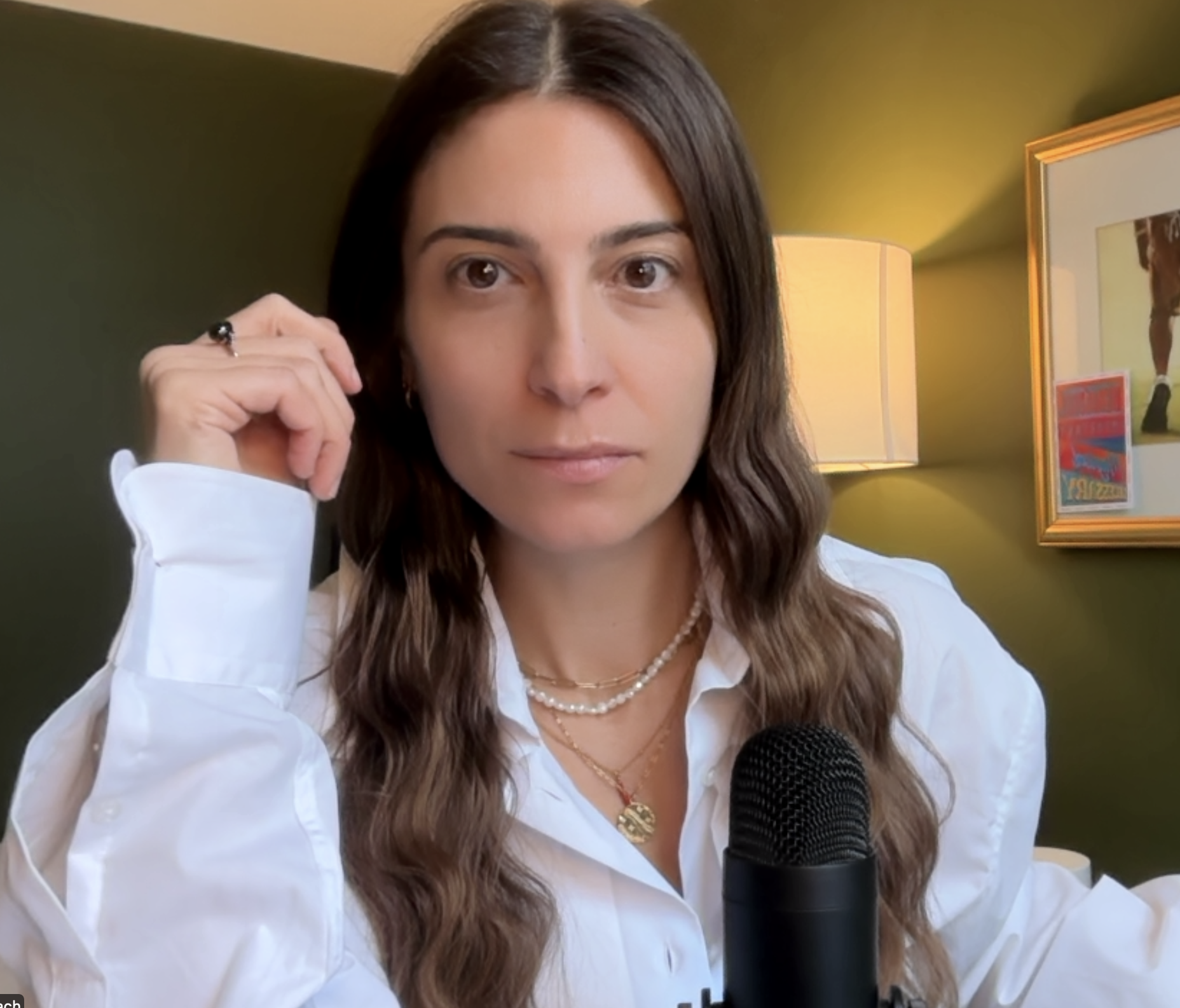
In this episode of The Mettā Interview, host Anne V Mühlethaler welcomes Giulia Galli, a London-based parental and mental fitness coach, author of When a Parent Is Born, and founder of Reegal Coaching.
After more than 20 years in international fashion and communications, working with global brands like Alberta Ferretti and Dunhill in roles focused on strategy, storytelling, and experience design, Giulia now brings that same attention to intention, coherence, and the impact of choices to the way we raise children. Her method is rooted in neuro-linguistic programming and combines intentional questioning, language awareness, and practical tools to help parents slow down, think clearly, and make conscious choices. Giulia co-founded Reegal with her father, whose lifelong work in personal development and responsibility represents a beautiful continuity of values across generations.
Giulia and Anne kick off their conversation with a passionate reflection on the state of the world, generational differences in how people respond to current events, and the responsibility she feels as a parent to help her children think critically. Giulia traces her roots back to growing up in 1980s Italy, where her parents broke with tradition in remarkable ways, like choosing not to baptise her, encouraging her to form her own opinions, and creating a household where questions were welcomed.
The heart of the episode explores Giulia's central question: "What is my intention?"
She unpacks how intention functions as both purpose and accountability — like setting a destination on a map that helps you navigate whatever comes up along the way. She explains how most parenting happens in what Virginia Satir called "the familiarity zone" — not comfortable, but familiar — and how stepping out of autopilot reactions transforms the parent-child dynamic.
Anne and Giulia both feel strongly about the skill of listening to understand rather than to respond or fix. Giulia credits Nancy Kline's Time to Think as revolutionary for her practice, and she and Anne explore how allowing space and silence in conversation unlocks deeper thinking for clients, for children, and for ourselves. They discuss the possibilities available to us all when we are allowed the opportunity to finish our thoughts, silence as a space of emergence, for responses so deeply human, an important skill in a world increasingly shaped by AI.
The episode closes with Giulia's message: be kind! In actions, in words, and especially in the space we offer one another. A warm, thought-provoking conversation about intention, listening, and the quiet revolution of raising children who can think for themselves.
Happy listening!
Listen to the Metta Interview on your favorite podcast platform
CONNECT WITH GIULIA
Website: https://reegal.co.uk
Substack: https://giuliagalli.substack.com
Check out her free training — Mind Strong
Get Giulia's book — When a Parent Is Born
Instagram @Reegal_Coaching
LinkedIn Giulia Galli
CONNECT WITH ANNE V
Website: AnneVMuhlethaler.com
LinkedIn: linkedin.com/in/anne-v-muhlethaler
Instagram: @annvi
BlueSky: @annvi.bsky.social
Your Story Your Map:
As promised, here's Your Story, Your Map — a contemplative guide to help you trace the arc of your life with intention. You get the ebook, an audio recording (for those who'd rather listen), and an editable PDF to journal your way into recalibration. $5. Get it here
The Mettā Interview:
Website: LeTrente.com/the-metta-interview
Spotify
Apple Podcasts
YouTube
Full transcripts and show notes: letrente.com/the-metta-interview
The Mettā View newsletter: themettaview.com
Newsletter signup: letrente.kit.com/metta-view
Le Trente:
Website: LeTrente.com
LinkedIn: linkedin.com/company/le-trente
Instagram: @le_trente_studio
Event calendar: Luma.com/LeTrente
Full episode transcript
[00:00:00]
[00:00:30] Speaker 7: Hi. Hello and welcome to the Metta Interview, , generous conversations with brilliant humans, contributors to Lat. I'm Anne Mühlethaler , and today I'm joined by someone I've known for over 20 years.
[00:00:46] Speaker 7: Giulia Galli. Giulia and I first met in the early two thousands when she was working at Alberta Ferretti on Sloan Street in London as a PR assistant. We both made our way [00:01:00] up or through the fashion world and communications and our path crossed against years later, thanks to a mutual friend. Now, after we reconnected, every other time I was visiting London, something I was doing often I'd reach out so we could grab coffee or a breakfast together.
[00:01:22] Speaker 7: Now we weren't close friends. We never tried to work together or create partnerships, so there was nothing transactional about our, fostering this connection. And yet I kept making time, which if you know how few hours there are in a days, not something I do lightly. And I think we both felt it, this quiet pull to stay in, in each other's orbit, even if neither of us could have explained why.
[00:01:51] Speaker 7: Now what I've always appreciated about Giulia is that our conversations never stayed at the surface. Even before either of us became coaches, there [00:02:00] was a depth and a directness to the way she engaged with the world that I found enticing. Now I'm mentioning this because I can't say I've always listened to my intuition, but in this case, I feel like I did and I couldn't have foreseen when we met over 20 years ago, or when we started meeting every now and then around eight, nine years ago, that Julia would be appearing on my podcast and a second podcast even.
[00:02:29] Speaker 7: How wild is that! That we would be sitting here talking about the importance of teaching kids to think about intentionality, about giving parents more choice and how they act and parent every day. I guess I'm sharing this with you to say if you find yourself in a similar situation following a pool, following your intuition about someone who you're not sure why you keep on connecting to.
[00:02:57] Speaker 7: Well, I'm thinking. It's worth it. [00:03:00] So today, Giulia is a London-based parental and mental fitness coach, the author of When a Parent Is Born and the founder of Reegal Coaching. After her many years in international fashion and communications, she now works with parents to help them step off autopilot and into conscious choice parenting with intention rather than from reaction or tradition.
[00:03:32] Speaker 7: Her methods draw from neurolinguistic programming, language awareness, and her own experience raising two children with a clarity and openness. That, as you'll hear, is quite remarkable. In our conversation, we explore Julia's question, what is my intention? We talk about curiosity, about the power of deep listening.
[00:03:57] Speaker 7: About the words we say to our children that they [00:04:00] carry with them long after we've forgotten. We set them and we end up somewhere neither of us quite expected reflecting on what becomes possible when we make space for silence, for thinking, and for the kind of knowing that only emerges when we stop rushing to fill the gaps.
[00:04:19] Speaker 7: I hope you enjoyed this conversation as much as I did. So without further ado, I give you my Metta Interview with Julia Gali. Happy listening.
[00:04:31] Anne V Mühlethaler : Giulia, thank you so much for being here. It's so lovely to have you on the Metta interview.
[00:04:36] Giulia Galli: Thank you for having me.
[00:04:38] Anne V Mühlethaler : So you and I met a long time ago. Long, long time ago. Yes. And actually surprisingly, I think I remember my first time meeting you really, if I'm correct, you had just arrived in London.
[00:04:50] Anne V Mühlethaler : You were a PR assistant at Alberta Ferretti on Sloan Street.
[00:04:55] Giulia Galli: Yes.
[00:04:56] Anne V Mühlethaler : And I was doing a bunch of different jobs [00:05:00] at right behind Sloane Street. And I remember you invited me Crucial moment in, uh, at a sample sale in your, at the basement of the store. I want to say.
[00:05:12] Giulia Galli: Yes. It was the basement.
[00:05:14] Anne V Mühlethaler : Yes. It was a highlight of my year.
[00:05:16] Anne V Mühlethaler : 'cause I think I had just arrived and I was like, oh my god, stars in my eyes. I still have a piece that I got that day with the most incredible embroidery.
[00:05:25] Giulia Galli: Really?
[00:05:26] Anne V Mühlethaler : I know. And it's just so incredible that I just can't part with it. Hmm.
[00:05:32] Giulia Galli: Oh, well, memories, those, those was beautiful times and beautiful pieces, so I'm glad you still had them.
[00:05:37] Giulia Galli: I still have a few too, so good times. But it must have been 20 years ago, I think, because I arrived in London. Yeah, yeah. In 2003.
[00:05:47] Anne V Mühlethaler : Yeah. So must have been exactly that.
[00:05:49] Giulia Galli: Wow. Long time ago.
[00:05:54] Anne V Mühlethaler : So I love to start the Metta Interview by asking my guests what's something that's, [00:06:00] exciting you, or that you're curious about at the moment.
[00:06:03] Giulia Galli: Huh? I am curious about so many things right now, you know, the state of the world, first of first and foremost, I, I am an avid podcast consumer. Of news and of opinion pieces. And what fascinates me right now is and I was talking to my friend today, how is it possible that there is such a big generational gap between me and my parents, or us and older people in terms of being enraged or not being enraged about what's going on in the world, you know?
[00:06:37] Giulia Galli: Mm-hmm. I assume that everyone with a little bit of humanity is just all on the same side, but I'm, it's not like that. So it fascinates me to understand how people react differently to what for me is like, I'm sorry. That's just crazy. It's a lot about the news. My feed on Instagram is basically all about the [00:07:00] news and what happens, it's not even fun anymore. I don't find anything inspiring anymore. So, yeah, that's the main thing.
[00:07:08] Anne V Mühlethaler : Yeah, I hear you. Being preoccupied with what's going on in the world is an active part of my existence as well.
[00:07:15] Giulia Galli: Mm-hmm. For sure.
[00:07:15] Giulia Galli: Mm-hmm. Yeah. Yeah. And I have as many conversation as I have with the people around me. I had a friend from the States on over the weekend and, I was asking her, because she lives in New York, how is it there first hand? So I talk to as many people as I want, as I can. Mm-hmm. The majority are sharing my same view, so it is good, but it's just adds to my frustration.
[00:07:39] Giulia Galli: And, but yeah, it is tough times. And then because I work with parents and I'm very conscious of how we speak about things, with children, I am very interested to explain to my children these things and how, what's happening and how to view it. And very amusingly this morning, my daughter, she's 15 and she said, oh, I'm gonna be voting [00:08:00] at the next UK elections, which is scary for me because that Wow.
[00:08:04] Giulia Galli: Shows how old she's and how old I am. And she said please, when the time comes, can you, please don't tell me who you're voting for, because I wanna make up my own mind. Oh, I love that. And I thought, okay, that's great. You know, she's already very thinking ahead, which,
[00:08:17] Anne V Mühlethaler : mm-hmm.
[00:08:17] Giulia Galli: Okay. But I like that. I like that she wants to make up her mind about it.
[00:08:22] Anne V Mühlethaler : That's beautiful. That's so great. It's funny 'cause as you were, I did not know where you, where you were gonna go with that story, but I had this echo. But generationally different that I remember sometimes I misunderstand what happens in the world and how people vote because of their affiliations and being wives and others and daughters.
[00:08:44] Anne V Mühlethaler : And because in my household, my parents did not vote in the same direction. My father was, you know, an ex-communist, a very strong leftist. Yeah. My mother was center and I love the idea that it was absolutely understood [00:09:00] that everyone could have their own opinion under the same roof.
[00:09:03] Anne V Mühlethaler : And I think if, maybe there's one thing that I find sad in the state of what I perceive to be the world right now, or the way we communicate is how less of that respect that everyone can come from a different, from a different opinion.
[00:09:19] Giulia Galli: You're absolutely right, and I actually saw something today about this, about people, saying that, well, one of these one things that I hope it's crazy, but I never know, is that they would like women not to have the vote because if they vote differently from their husband, it's divide in the family.
[00:09:38] Giulia Galli: And I had to listen to it twice because I was, I was confused, but also enraged as you can imagine, of how this was even a conversation or an issue. And in my mind, if I think differently than my husband, that's great. We can have a discussion. We can actually enjoy each other's view. And I don't think we married each other for [00:10:00] our political views.
[00:10:00] Giulia Galli: So, you know, and these can shift throughout the years, but even thinking that the solution to division in the family is removing the vote to women. Yeah. I mean, it is crazy. I don't even know how else to call it.
[00:10:17] Anne V Mühlethaler : Yeah. Well, let's, let's move back a little bit. Yeah. Because we could get in there. Sure.
[00:10:24] Giulia Galli: Oh my God, I could continue on that and then if you, if we start talking about women and feminism and all of that, I
[00:10:29] Anne V Mühlethaler : know
[00:10:30] Giulia Galli: could have a field day, but we're not here for that.
[00:10:32] Giulia Galli: So
[00:10:33] Anne V Mühlethaler : Not today. Maybe we should make a plan to do that another day.
[00:10:37] Giulia Galli: Yes, I would love that.
[00:10:39] Anne V Mühlethaler : So I'd love to ask you to introduce yourself for our listeners in any way that you feel like.
[00:10:47] Giulia Galli: Sure. I am Giulia Galli. Nice to meet you all. I am originally Italian and I live in London, and I help parents create incredible relationships with their children.[00:11:00]
[00:11:00] Giulia Galli: This is it in a nutshell. How do I do it? I'm a parental coach and I work with parents through sessions, through webinars, through my book, my newsletter, a lot of resources out there for parents. And I help and support them become more intentional in the way they parent starts parenting from a place of choice rather than from a place of tradition or reaction.
[00:11:25] Giulia Galli: And am my mission, I've shared this with you beforehand. My mission is changing the world through the way I raise my children. And that for me is why I am so passionate about working with parents. Mm-hmm. And it kind of links to what we were saying before, our world's , needs great humans, great human beings.
[00:11:42] Giulia Galli: And our job as parents, our responsibility is to raise better humans.
[00:11:49] Anne V Mühlethaler : Mm-hmm.
[00:11:49] Giulia Galli: Humans that can help shape a world or society where. Good values are shared and lived. Mm. So that is my main mission. But you know, [00:12:00] I also help parents solve some tantrums and behavioral issues and a lot of other things that in the daily life are very hard.
[00:12:07] Giulia Galli: So it's not just all philosophy. There is a lot of practice as well.
[00:12:11] Anne V Mühlethaler : Sure. That sounds great. Perhaps you can recall a moment of joy or an important moment in your childhood and, and how your parents raised you that made you into the woman you are today.
[00:12:23] Giulia Galli: Absolutely. I was very lucky with my parents.
[00:12:27] Giulia Galli: Um. I grew up in the eighties in Italy. So mind you, it was a very traditional world. The culture, the church, how women were perceived. Everything in the eighties in Italy was very traditional. My parents were not that. My mom got her degree in law when she was pregnant with me.
[00:12:45] Giulia Galli: They got married very early on. They decided not to baptize me, which was crazy for those times because they wanted me to make up my mind. So my, my household was very open. We could talk about everything and they would [00:13:00] talk to me and I was encouraged to be myself, which was incredible.
[00:13:06] Giulia Galli: But when I was a teenager, I didn't really know what to do with that. I didn't know what to do with myself. There was a very momentous time. When I was in high school, when my English teacher decided to take me out of the classroom and have a talk with me. Now, as I said, my household was very open, so I was, for me, it was normal to share my opinion and talk, and discuss and ask questions For me.
[00:13:33] Giulia Galli: Asking questions was so important. I wanted to understand why people were saying things, why, and especially when I was in school, and it wasn't about authority per se. It wasn't about rebelling. I would, I was a rule follower. I just wanted to understand things better. I wanted to understand why I was learning these things, why they were explaining these things to me.
[00:13:54] Giulia Galli: Why did it matter to me? So I was always asking and digging deeper and stopping and [00:14:00] raising my hand. So this teacher at one point, she called me out of the classroom and she was like, on behalf of the whole teacher body, please stop. I was like, what do you mean? She said you interrupt too much.
[00:14:13] Giulia Galli: You disrupt the lesson. We get it. You wanna, we get it. You wanna know, but please stop. We can go on like this.
[00:14:21] Anne V Mühlethaler : Hmm.
[00:14:21] Giulia Galli: And I remember I wasn't angry. I was actually thinking back about it now. I must have felt like, okay, I'm on the right direction then if they are uncomfortable with my questions, if they had to stop me, I must be doing something right.
[00:14:36] Giulia Galli: That's what I was thinking. And I think that was very, it was very important for me because it didn't stop me from being curious, but curious. Not as in nosy curious as in, I wanna understand what's behind this and I want it to make sense for me rather than stop me. And so I don't know if that was her intention or not, but really that was the beginning of [00:15:00] my journey of not only self discovery, but also.
[00:15:05] Giulia Galli: Discovery of why things were done the way they were.
[00:15:09] Anne V Mühlethaler : Mm.
[00:15:10] Giulia Galli: Because as I said, I was always a rule follower. I was never rebellious. I never did anything weird or scary or dangerous, but I never wanted to follow the crowd. Mm-hmm. I always wanted to find my own way, a way that mattered to me, you know?
[00:15:27] Giulia Galli: Mm-hmm. In my time, with my resources and, um, I was lucky because this was allowed in my family and I never felt like I had to comply to a certain way. You know, I got married in Las Vegas and I didn't invite any of my family, and everyone was like, oh my God, what did your mother say?
[00:15:45] Giulia Galli: I never did anything thinking what would my parents think?
[00:15:48] Anne V Mühlethaler : Mm-hmm.
[00:15:49] Giulia Galli: Because it was always my story and that was always encouraged from them. Always, which is a big privilege, I think.
[00:15:57] Anne V Mühlethaler : Wow. That's amazing. [00:16:00] That was an incredible sentence. It was always my story.
[00:16:05] Anne V Mühlethaler : Hmm. It's a, isn't
[00:16:07] Giulia Galli: that important?
[00:16:10] Anne V Mühlethaler : Yes, it feels so important. And I find I moved because I find an echo, I guess, in my own parents' style, although there's plenty of things that we were not lucky with in terms of my family and lots of difficulties at times. But this thought that we were both raised, my brother and I, to be told, you could be whatever or whoever you want to be, you could marry whoever or not this, this, this, this, openness.
[00:16:42] Anne V Mühlethaler : And also we, neither of us were baptized either, not present. We were, we were told that if we wanted to choose a religion, then we'd be free to. Fascinating. Yeah. Your father is a coach. If I, my
[00:16:56] Giulia Galli: father is a coach. He
[00:16:57] Anne V Mühlethaler : wasn't back
[00:16:57] then,
[00:16:58] Giulia Galli: so
[00:16:58] Anne V Mühlethaler : I didn't think so. [00:17:00] Yes. When did your father become a coach?
[00:17:02] Giulia Galli: He became a coach when he was 50 years old.
[00:17:05] Anne V Mühlethaler : Mm.
[00:17:06] Giulia Galli: He grew up, in a very big family. He was the last of eight.
[00:17:10] Anne V Mühlethaler : Mm-hmm.
[00:17:11] Giulia Galli: So his, his family story is much different from ours. He did not have a very safe or, or, or cushioned upbringing. Mm-hmm. And, uh, he grew up in the family business, which was, an auto shop. So it was a garage.
[00:17:24] Giulia Galli: And he then grew into this business and then made it like a much bigger business of automobiles. And it wasn't his passion, you know? Mm-hmm. He kind of did it, and he did it well. But he always said, I'm gonna stop when I'm 50, which I've always found it fascinating because, you know, I was like, okay, how do you know that and what will you be doing?
[00:17:44] Giulia Galli: He in fact did stop when he was 50. Mm-hmm. And he started studying and then he became a coach. But he always had what I think are very important, traits of a coach, characteristics, which is he was always very empathic. He was a [00:18:00] great listener and he never tried even before even, you know, in the eighties or before he even became a coach, he never tried to push his own view on people.
[00:18:11] Giulia Galli: And so I think he was kind of born to be one. Yeah. But he found his way later in life. And I also find my way later in life, because I didn't start as a coach. I was as, you know, as you just said, we met when I was working as I know, working in fashion. I think it is kind of like a similar path, fortuitous and, and, and coincidental, but also I think I was influenced much by him. So that helped.
[00:18:35] Anne V Mühlethaler : Mm, yeah. That's beautiful. Now, one of the things that I aim to bring to the forefront, with the Metta interview is just how multifaceted we are. And so I, I'd love to ask you, what would be an early experience in your life that you think has first planted the seed for the work that you do now?
[00:18:58] Giulia Galli: Hmm. [00:19:00] Well, I don't know if that, if this was early in life, because I think that what, what happened in high school and how I started asking these questions mm-hmm. Was a very important moment. I don't know if it definitely shaped the person that I became, but what I'm doing now, I think it came fairly recently.
[00:19:18] Giulia Galli: I mean, I became a mother 15 years ago, so I'd like to think it's recently, it's not that recent. Um, but when I became a mother, I remember. I remember thinking, um, this is important.
[00:19:32] Anne V Mühlethaler : Mm.
[00:19:32] Giulia Galli: Okay. I never, I dec it was a conscious dec decision for me, although my body made it for me. I kind of felt like the need of becoming a mother.
[00:19:40] Giulia Galli: And I remember my then boyfriend, our husband, I was like, one day I was like, okay, now we're gonna have a baby. And he was like, what? What do you mean? I was like, I'm sorry. I need to, I mean, I just like, I need to, I don't know how else to explain it. And, um he trusted me. He didn't say no, he didn't even say yes, though he [00:20:00] trusted me.
[00:20:01] Giulia Galli: But I remember when she was born, I remember thinking, this is important. This, this matters. This matters a lot. And the way that I wanted to raise her was intentional. But I didn't have the world at the time. I didn't have that word. I wasn't a coach. I didn't have all of the instruments that I have now.
[00:20:19] Giulia Galli: But I knew that I wanted to do it in a way that was true to myself and that was also good for her. I obviously didn't know what was good for her. It's good, what's good for me in the first place because obviously, I don't know. It was always there. And when my son was born as well, then I had a boy and a girl, and obviously for me gender and, and roles in society has always been a, a big part of the discussion, so mm-hmm.
[00:20:48] Giulia Galli: I was always very attentive to the way that I was raising them and the, what I was teaching them about each other, about themselves, about the relationship. And I remember my first act of [00:21:00] intentionality. Mm-hmm. Again, I didn't know it then, was when they were very little and they were so little, they were probably like five, seven.
[00:21:10] Giulia Galli: And I remember telling them that there was not gonna be a coming out in our house. They were like, we don't know what that means. And I said, I do not expect you to be, to be loving a woman or a man or anything. I don't, I don't expect you to, to be a certain way.
[00:21:31] Anne V Mühlethaler : Mm-hmm.
[00:21:31] Giulia Galli: So whatever you turn out to be or to, or, or, um, find out that you are, you don't have to declare it.
[00:21:40] Giulia Galli: Whatever you are, there's no need of a declaration because I just care that you are you and you explore who you are. And I remember my husband was like. What are you doing? They don't understand. And also like, what's this thing? But for me it was important.
[00:21:56] Anne V Mühlethaler : Could see how a 5-year-old would be like, thanks, yes.
[00:21:59] Anne V Mühlethaler : What, [00:22:00]
[00:22:00] Giulia Galli: what
[00:22:01] Anne V Mühlethaler : can I have an ice cream now Gelato?
[00:22:03] Giulia Galli: Absolutely that, but that was also fine for me, but it was important for me to tell them. And I repeated that in different ways when they were slightly older. But the point was, for me, I don't expect you to be anything. So in your discovery, which by the way could be anything.
[00:22:20] Giulia Galli: So discover who you are before deciding that you are something. When you'd find out, just beat it. Mm-hmm. You know, I read so many stories of people that the coming out to their parents is such a difficult moment. It breaks them and it's, it's confusing and it's warring, and I didn't want that for them. So I said it out loud.
[00:22:42] Giulia Galli: I put it out there.
[00:22:43] Anne V Mühlethaler : Mm-hmm.
[00:22:44] Giulia Galli: That was my intentional declaration and you know. Whatev, however landed back then.
[00:22:50] Anne V Mühlethaler : Mm-hmm.
[00:22:50] Giulia Galli: But for me, that was the first moment where I took a decision of the parent I wanted to be and I said it, and I put it out there. So I think that [00:23:00] was quite transformational because from then on I thought very, very hard about everything that I was doing with them and why matter and why it was going to matter.
[00:23:12] Giulia Galli: And so, you know, there wasn't much space to reaction anymore. It was all very intentional. In fact.
[00:23:20] Anne V Mühlethaler : Yeah. You're making me a little bit tearful.
[00:23:25] Giulia Galli: Oh.
[00:23:27] Anne V Mühlethaler : I'll tell you why. And I, and I know this is something that's, because you write a lot as well, and I know you journal and you use a lot of coaching tools, the more we dig into our own story and try to make sense and of what our life has been and, and.
[00:23:43] Anne V Mühlethaler : And I think for a lot of us, when you go into this kind of field, self-awareness and self-understanding is part of the core that helps you show up, right? For your clients, for our audience, for the readers that, that you have. And and I [00:24:00] think that we can have a lot of stories about our families that are reductive, particularly around our parents.
[00:24:07] Anne V Mühlethaler : And there's certainly a, an unexamined version of me, younger me that was perhaps, blaming my parents for x, y, z parts of my life. Not that I'm a, I'm not a strong blamer. I tend to take responsibility for myself, however. I remember my mother making the kind of comments, not the same, right? But in her own way.
[00:24:33] Anne V Mühlethaler : And for her, it was not about gender, it was about race. I remember it incredibly clearly, her telling me at bedtime when I was, I don't know, seven, eight, I must have asked a question and her saying, you know, you can love whoever you want to love, and you can have kids with whoever you want to have. And it's funny because our parents say a lot to us throughout our lives, throughout our times [00:25:00] that we have together.
[00:25:01] Anne V Mühlethaler : And there's so little that we remember. And the fact that this makes it in my consciousness, I think speaks to how important it was. There was also a moment where I once said to my mom, mom, do we know anyone who's gay, but a TV show or something? And I remember very, very well, because we're hanging the laundry.
[00:25:24] Anne V Mühlethaler : And I must have been 11. And she said, yes, darling. And I went, who? And she said, well, you have to guess, and this is not, you know, there was not a lot of TV shows with gay people. I mean, there was not, you know, this was 1985. Okay. And it didn't take me that long. I ended up realizing that my great-uncle shared a very, very large bed with the wonderful Michel, and they were both men.
[00:25:52] Anne V Mühlethaler : So, and eventually the penny dropped. But it's funny how I, [00:26:00] not funny, it makes me
[00:26:03] Anne V Mühlethaler : appreciate this openness, the sweetness, the, the gift I think that we can give, to kids when we. Give them support or actually when we give them positive, reinforcement or positive, positive feedback like that teacher gave you. Please stop asking questions. Please stop. For sure. I just love the fact she said the whole, uh, was it teacher body?
[00:26:32] Anne V Mühlethaler : The
[00:26:32] Giulia Galli: whole teacher bot? Yeah. Everyone. She's like, I'm speaking on behalf of everyone. I'm speaking on behalf.
[00:26:41] Giulia Galli: Yeah. But it's like when, when you were telling the story of your mom, it's like you had permission when you were seven. Yes. To, yes.
[00:26:49] Anne V Mühlethaler : To
[00:26:49] Giulia Galli: be. And I like that because when, when children are small, they are asking permission, you know, in different ways. Not necessarily asking, maybe sometimes they act it out, but essentially when you're [00:27:00] telling them they can be whoever they are, you can, you're giving them permission also to find out, to discover.
[00:27:05] Anne V Mühlethaler : Yeah.
[00:27:05] Giulia Galli: For me, that was when I declared that to my children, it wasn't just about don't, you don't need to tell me. It's all fine, but it's also about, you may also want to discover a little bit, you know? Yeah. I don't, I, I grew up in a very traditional culture, you know, I, I didn't know any gay people when I was mm-hmm.
[00:27:22] Giulia Galli: Growing up. There wasn't any, or at least they weren't out there. So I didn't have that kind of idea that I may be, or I may like, that wasn't an, that wasn't an option. And I'm not saying that I'm better or worse for it, but it's just what it is. So it's also giving them permission to discover, to experiment to find out and be a little bit more open with themselves and give themselves space.
[00:27:52] Anne V Mühlethaler : Yeah.
[00:27:52] Giulia Galli: Rather than having to grow up into a mold that society creates for us. And [00:28:00] unspoken permission maybe also does for us. So yeah. It's opening. Let's open it up.
[00:28:05] Anne V Mühlethaler : Yeah. Now, when did you first become interested in your current field? When did the seed of intentional parenting become something that you thought you were going to do for work?
[00:28:21] Giulia Galli: Of course. I became a coach before becoming a parental coach. Mm-hmm. I think that in my 20 years in fashion communication, being a coach to the CEOs, the credit directors, all of the people that I was working with was a big part of my role without really realizing it. Yeah. Because, you know, they had to be media trained and they had to, I had to help some of them become a creative director, as in like a, a, a forward facing person.
[00:28:51] Giulia Galli: Sure. They were never one. So there was a lot of coaching into making them believe in themselves, making them believe in what they were gonna say, giving them [00:29:00] tips. How to breathe, how to speak, you know? So there was a lot of the work being done throughout my career, which was in communication anyway, so sure, it was for sure kind of already, an important foundation to this.
[00:29:17] Giulia Galli: But when I then did my certifications and my courses in neurolinguistic programming, I remember the first one I did, I did it just for myself because I decided to leave fashion and I wanted to discover finally in my forties who I was and what I liked. 'cause I had been doing fashion since I was very young.
[00:29:37] Giulia Galli: And it kind of, it happened to me and I had a lot of fun and I loved it for me. But then I wanted to find out, okay, who, who am I really? So my first NLP course was just, for me, it was just to really find out what I could use this for. You know, what, what were the things that I could use this better for?
[00:29:57] Giulia Galli: I loved it so much that I decided to continue and [00:30:00] then I took my master and then I took other certifications and I was coaching people on life.
[00:30:06] Anne V Mühlethaler : Mm-hmm.
[00:30:06] Giulia Galli: That's what I knew, which was all great. You know, I love that. It's, it's fantastic. I also love to talk to people. I love to listen to people. So it was really fitting for me until at some point it happened very close to two moments, very close to one another.
[00:30:23] Anne V Mühlethaler : Mm-hmm.
[00:30:23] Giulia Galli: Of two people who know my family, my children know us. And in two different occasions they all both said in different ways, but the concept was, I really wish my children are gonna grow up like yours. You know, your children's are really, really great. And I remember in both time thinking, thank you.
[00:30:43] Giulia Galli: But also that's not a coincidence. You know, they are great. But I did a lot, you know, my husband and I did a lot to raise them like this. Mm-hmm. So it, it just didn't happen. We made it happen. So that was kind of the catalyst [00:31:00] to the thinking that, okay, I am a good parent because I've got proof and people say that to me.
[00:31:07] Giulia Galli: So it's not just my own, this, you know, my own perceived perception.
[00:31:12] Anne V Mühlethaler : Mm-hmm.
[00:31:13] Giulia Galli: But now I also have instruments and tools and strategies mm-hmm. Of how the brain works and how language is important. And a lot of things from coaching and NLP that I didn't have before, so I decided to put it together. Mm-hmm.
[00:31:29] Giulia Galli: And I thought, this really is my field. This really is my niche because I really care about the way we parent. For me, it really is important. And I do put in the work first and I did before this, so.
[00:31:47] Anne V Mühlethaler : Mm-hmm.
[00:31:47] Giulia Galli: You know, I, I, I walked the walk before doing the talk. Yeah. You know? So when I started crafting my method and putting it all together and researching and doing even [00:32:00] more courses mm-hmm.
[00:32:00] Giulia Galli: To make sure that, you know, I was actually, gaining all of the, all of the insights that I could and researching everything, it kind of all made sense because, you know, I, I, I kept thinking, we prepare for a job. We do go to university, we do read and research and we also, keep up with the work and we have managers giving us feedback and in the workplace, et cetera.
[00:32:25] Giulia Galli: But parenting, which arguably is the probably one of the most important job that one person who is a parent can have. No one learns. We kind of go on with the, with what we, with what our parents did that we liked or that we didn't like. So we adjust on the job. But very few of us really. Stop and think and choose what kind of parent they want to be for their children.
[00:32:56] Giulia Galli: And I thought this was important.
[00:32:58] Anne V Mühlethaler : Yeah.
[00:32:58] Giulia Galli: I thought this was, this was, [00:33:00] this was gonna be something that I was encouraging people to do from now on because I'm not teaching them how to be a parent. I'm not giving them my method. I've not given them my values.
[00:33:10] Anne V Mühlethaler : Mm-hmm.
[00:33:10] Giulia Galli: What I'm giving them is the opportunity to stop, look back, reassess.
[00:33:18] Anne V Mühlethaler : Mm-hmm.
[00:33:18] Giulia Galli: And go forward with intention. Which means from a place of choice, I work a lot with parents on values for example. Like what are your values? Are they really yours? Do they come from your parents, from society? Do they still fit you?
[00:33:34] Anne V Mühlethaler : Mm-hmm.
[00:33:35] Giulia Galli: And are these the values you want your you to give your children?
[00:33:38] Giulia Galli: And how do you leave those values for them? How do they show up every day? I think for me, values are. Like the lighthouse.
[00:33:47] Anne V Mühlethaler : Mm-hmm.
[00:33:47] Giulia Galli: They show us the light. Yeah. When we know where our values are, we know where to go because decisions every day are either abiding to those values or not. That's so easy then, you know.
[00:33:59] Giulia Galli: [00:34:00] Yeah. So it became a calling before it became a job. It became very important. It is very important to me. And I do work with parents who are struggling with, as I was saying before, everyday issues because, you know, sometimes course correcting is more difficult than starting out intentionally.
[00:34:20] Anne V Mühlethaler : Mm-hmm.
[00:34:22] Giulia Galli: And especially parents of teenagers because it, it is traditionally a time of friction. Teenagers are testing out who they are. I remember, you know, I told you when I was a teenager, I was so, yeah opinionated and I wanted to find my way. So it is a time of friction. So when parents have tools.
[00:34:43] Giulia Galli: Of intentionality. Well, there are less frictions. They don't disappear. They're still teenagers. You know, that's their job. But it is much more enjoyable and so yeah, that's what I'm set out to do.
[00:34:59] Anne V Mühlethaler : Thank you. Thank [00:35:00] you for sharing that. I love that this came from feedback. Right. It makes sense. I understand that.
[00:35:09] Anne V Mühlethaler : I feel like it's the, something similar happened with me where people kept on coming to me to talk about how to speak about who they are. Right. I didn't set out to start in this direction, but I could see how I was writing about it all the time. Oh, you made me laugh so much by the way. I don't know if you noticed that.
[00:35:28] Anne V Mühlethaler : I just as you were talking about how technically you were kind of always coaching in your role in communication and fashion. Yes. I, my head went back and I started giggling because. Bless them. I used to joke that Christian Luta, my old boss, was both like a father and a toddler. It's like my dad and, and my child.
[00:35:51] Anne V Mühlethaler : So the coaching, all of what you described just resonated very deeply with me is,
[00:35:58] Giulia Galli: doesn't it? It's ingrained. You [00:36:00] have to, it's, I think that to be a good, and I dunno if the word PR is a good word for what we were doing actually, because it was so much more than that. But to be doing that, it
[00:36:09] Anne V Mühlethaler : was,
[00:36:10] Giulia Galli: to be doing that role, you know, our own state was important, our role.
[00:36:15] Giulia Galli: 'cause it was never about us, but the way we were, was conducive of the way that they would become, you know, we had to be in a state.
[00:36:24] Anne V Mühlethaler : Yeah.
[00:36:24] Giulia Galli: That was calm and confident and we had to had it and then
[00:36:28] Anne V Mühlethaler : yeah.
[00:36:28] Giulia Galli: Give it to them, for them to be able to do it on camera and like reassuring and giving them the right words, you know?
[00:36:35] Giulia Galli: Mm-hmm. If it's not a coach, I don't know what that is.
[00:36:40] Anne V Mühlethaler : No, no. You're so right.
[00:36:43] Giulia Galli: Yeah.
[00:36:44] Anne V Mühlethaler : Now, if you were to describe your professional journey as a type of journey, so it could be, I don't know, a train journey, a road trip, a climb, or I don't know, if it's a Western, you're on [00:37:00] horseback, a safari. What kind of journey would you describe your career to be so far?
[00:37:05] Giulia Galli: Wow. Um, My career has been, it, it's like, okay, I have it. It's like a roller coaster.
[00:37:12] Anne V Mühlethaler : Mm-hmm.
[00:37:12] Giulia Galli: Which I don't love, by the way. I don't love roller coasters. I have recently been on one for the first time and. I was like, it's not for me.
[00:37:22] Anne V Mühlethaler : Okay.
[00:37:23] Giulia Galli: Because the rollercoaster, well be the, the one I've been on went uhhuh up, up, up very slowly, very enjoyably.
[00:37:32] Giulia Galli: Mm-hmm. Very steadily on the app. Mm-hmm. Which is exactly how I did in my fashion career. You know, I started as an intern and then I became an assistant, I became a manager, I became a director.
[00:37:43] Anne V Mühlethaler : Yeah.
[00:37:43] Giulia Galli: From Milan to London. And it was steady and it was easy and it was enjoyable and it was fun. Got to the point, stopped for a while.
[00:37:52] Giulia Galli: So I was on my rollercoaster. I was in this adventure park in Italy, and then the rollercoaster stops at the top and you're like, [00:38:00] okay, I enjoy the view. This is quite good. And then it goes like, and it went down. And that's exactly what happened. I got to the top of my fashion career minute, the top that I reached, and I was like, I quite enjoyed this.
[00:38:16] Giulia Galli: I don't know, let me see what's next. And that. I left and it went down and I went straight to the bottom.
[00:38:24] Anne V Mühlethaler : Mm.
[00:38:24] Giulia Galli: And then it was scary. So the way down was very scary because to to, to compare it to the rollercoaster, you know, it was enjoyable on the way up. And I knew what was going to happen, you know, and I knew what was what I, where I was.
[00:38:39] Anne V Mühlethaler : Mm.
[00:38:39] Giulia Galli: And then all of a sudden it was down and it was so scary. And I didn't know what was gonna come next.
[00:38:45] Anne V Mühlethaler : Yeah.
[00:38:46] Giulia Galli: So the rollercoaster went down and then it can like, you know, like sideways and curve balls. And this is what happened from the moment I left to where I am now.
[00:38:57] Anne V Mühlethaler : Mm-hmm.
[00:38:58] Giulia Galli: I tried different things.[00:39:00]
[00:39:00] Giulia Galli: I experimented, I researched, I went sideways.
[00:39:03] Anne V Mühlethaler : Mm-hmm.
[00:39:04] Giulia Galli: I was on a high and then again on a low.
[00:39:07] Anne V Mühlethaler : Mm-hmm.
[00:39:07] Giulia Galli: And I was sure I was doing the right thing and I was questioning everything.
[00:39:12] Anne V Mühlethaler : Mm-hmm.
[00:39:13] Giulia Galli: And I think now I am. Not at the bottom. I mean, I'm not, or at the top of it, I'm not done. I'm in that moment where I'm like, okay, I'm not scared anymore, but I'm still under, I, I'm still in the cart, you know, I'm still,
[00:39:27] Anne V Mühlethaler : yeah.
[00:39:28] Giulia Galli: It's still moving. So I don't know whether now it's gonna still start going up steadily enjoyably. Mm-hmm. Or if it's going through a little more curve balls. Um mm-hmm. I feel like I am at the beginning of my journey for this new part.
[00:39:44] Anne V Mühlethaler : Sure.
[00:39:45] Giulia Galli: And it's not as clear as it was the beginning of my other journey.
[00:39:51] Anne V Mühlethaler : Mm-hmm.
[00:39:52] Giulia Galli: Probably because I was young and I didn't have many responsibilities as I do have now. I also didn't [00:40:00] have maturity enough to be maybe worrying or thinking so much ahead. I was living kind of day by day and it was good enough for me that it was fun and challenging and interesting and new. I would say it's, it's, it's been a ride and it is going.
[00:40:19] Giulia Galli: Mm-hmm. I'm not a risk taker, so the, the scary parts are not very enjoyable for me. I much rather know exactly what happens. Mm-hmm. But I know that can be, that's not life. So I know that. So I, I'm open now. I'm much more open and I think before it was a career, now it's a passion and it's different.
[00:40:42] Giulia Galli: And I think that everyone that I've talked to that are pursuing their passion told me it takes time and it takes work and effort, especially for something like I'm doing that is not necessarily so common or mm-hmm. [00:41:00] So known.
[00:41:01] Anne V Mühlethaler : Yeah.
[00:41:01] Giulia Galli: You know, I don't think many parents. Think about a parental coach the first time they have an issue.
[00:41:07] Giulia Galli: You know, I don't think that is the first time at all, the first thing that comes to mind at all. So I do think that there is a little bit more of learning from me and for my clients base before this really become, again, like a steady career. But I love that and I love that I am still in the discovery phase of a lot of things.
[00:41:33] Giulia Galli: And the more I work with parents and the more this becomes, richer and stronger, and so I like it. I like it now.
[00:41:46] Anne V Mühlethaler : It's a very powerful Mettaphor. I, I find when we describe our professional path as a type of journey, you had me with you there on the rollercoaster. [00:42:00] I had love to ask you, switching gears a little, I'd love to, to find out, what's a skill that you've acquired that surprises you?
[00:42:15] Giulia Galli: Well, a listening to understand and not listen to correct or listen to solve more than correct. One of, one of the things I'm very good at is fixing things, right. I am quick on my feet. I can, something happens like da da, da, da, okay, I can fix this. I can give you the solution. I got ideas. You know, that is I, it's my strong suit and I love that about me.
[00:42:46] Giulia Galli: Mm-hmm. I don't think that is necessary all the time for other people, at least, you know, I think it's good if someone comes and asks, help me fix it. They would benefit from me. Before [00:43:00] I was very impulsive in jumping in with solutions and with my way. And it turns, you know, we've established, I was opinionated since the beginning and we've established I was strong and direct and that was something that still is, I have learned to listen, to understand.
[00:43:19] Giulia Galli: I have learned to listen really to actually, now that I'm thinking about this, this is the skill that is happening in what I was looking for back then because I was looking to understand, but I was probably not listening very well. I was already thinking about my next question or thinking about why why what.
[00:43:37] Giulia Galli: And now that I have developed the skills of really listening, really be present.
[00:43:44] Anne V Mühlethaler : Mm-hmm.
[00:43:44] Giulia Galli: I discover so much that I don't even need three or four questions that I might have needed before. And one thing that was revolutionary for me. Was a book that I know you have because I can see through your Microsoft [00:44:00] microphone, it's Time to Think.
[00:44:01] Anne V Mühlethaler : Yes.
[00:44:01] Giulia Galli: And we've discussed about this before. When I read that book, it all made sense.
[00:44:08] Anne V Mühlethaler : Mm.
[00:44:08] Giulia Galli: And it the time to think, which for me is as a listener, allowing the time to think to the person that is with me opens world to them and to me to them. Because with time when we are not forced, we can find out so much of what's going on inside things, thoughts that we've never thought of.
[00:44:35] Giulia Galli: But you need someone who allows that time. Yeah. And someone who allows you the presence as well. And to me as the listener, because I really find out what comes out of the other person and. Most of the time people surprises me so much. Not because I didn't think they were capable of, but because without allowing them or allowing [00:45:00] people the time to think, we stop at surface.
[00:45:03] Giulia Galli: Mm-hmm. You know, we don't allow for deeper thinking and I love deeper thinking.
[00:45:08] Anne V Mühlethaler : Mm-hmm.
[00:45:09] Giulia Galli: So the skill of listening is something that I hold very, very precious and it's a treasure for me now. It's something that I don't wanna let go ever. So it takes practice to become a good listener.
[00:45:23] Giulia Galli: And it takes for me also reminding myself that now I am a good listener, so I have to listen as well. I value it a lot. Really, really a lot.
[00:45:35] Anne V Mühlethaler : Yeah. It's it's a real gift to oneself really. One of the, one of the things that I've had the pleasure to develop over the last few years by having a first podcast Out of the Clouds, while I was doing my mindfulness teacher training while I was doing my coaching [00:46:00] training. And because I was editing my own work in audio before some of the current tools, 'cause I used to be a singer, so audio editing did not scare me.
[00:46:11] Anne V Mühlethaler : I noticed physically in front of me, right, looking at the wave, the wavelength of the various parties in conversation, how much even an interruption like I have done, just saying, Hmm can actually disturb the other person's thinking. And so I do my best when I show up here and I do my best when I show up for my clients.
[00:46:36] Anne V Mühlethaler : And I'm sure like you then maybe in my day-to-day life, slightly less effective, still a work in progress. But what I think is really fascinating is to look at what happens when we let people go to the end of their thought, right? Because we can go so [00:47:00] much further, but if we get stopped then it's the pattern interrupt and then we don't discover.
[00:47:08] Giulia Galli: I agree. I also think that people at first are scared of the silences. So they're, so you people, and I'm generalizing of course, but most of the people are used to a back and forth exchange. So I find that when I'm, especially obviously when I'm with a client and they speak and I listen and I don't even speak immediately after they've stopped, I leave a little bit of a pause.
[00:47:37] Giulia Galli: At the beginning that makes them, it makes them a little bit uncomfortable, which I like by the way. Mm-hmm. They need time to understand that this is allowed, that this is okay, that I am actually encouraging the time, the space, once they learn this
[00:47:52] Anne V Mühlethaler : mm-hmm.
[00:47:53] Giulia Galli: They really go into it and they kind of expect it.
[00:47:57] Giulia Galli: So they speak, they stop [00:48:00] and then they continue. But they know that they have that pause to continue their thinking inside. Because when you don't know that you have that opportunity, that luxury, you don't go any deeper. You stop there. Right. And you wait for the other person to speak and then you continue.
[00:48:18] Giulia Galli: But when you know you have that space, there is where you find your next thoughts. Which is still yours. It's not polluted by what I said, which may enrich it or not, but still it's different. That one is still yours, it's still coming out of you. So I am talking about these listening space to as many people as I can, even outside of my work, even my friends, my, my kids, everyone.
[00:48:48] Giulia Galli: Because I would like this to become something that people expect or that at least when they grant, the other person knows that this is a possibility. So a different kind [00:49:00] of human interaction comes out. Something different. And I told you this before, but I was always finding, I was always looking for another way.
[00:49:09] Giulia Galli: Yeah. I was always looking for a different way. So when I find something, that for me is revolutionary.
[00:49:18] Anne V Mühlethaler : Yeah.
[00:49:18] Giulia Galli: I wanna, I wanna. I wanna put it out there because there must be other ways of doing things other than the ways that we are so used to. Mm-hmm. That work sometimes. Sometimes they may not, and they don't work for everyone because there are people that don't form thoughts as quickly as others, and they need time.
[00:49:37] Giulia Galli: Otherwise, they are categorized as the quiet ones or the ones that don't really have an opinion, but they don't have time to form it. So let's give these people space.
[00:49:53] Anne V Mühlethaler : You know, I think we had to talk about this today. Years ago I [00:50:00] did a course with Seth Godin, which was seminal moment in my life called the old MBA. And one of the prompts Horrifyingly, difficult prompt was we had to all figure out one thing that we'd want to talk about publicly. And I remember that at the time there were some dissensions in, in Spain.
[00:50:29] Anne V Mühlethaler : I remember because I was talking about it with my friend Lupe. There were some issues in the region of, of, Catalonia and also in the Basque country. And I remember hearing a particularly difficult interview with a man who was very famous with a big podcast and who just explained that he'd been molested as a child.
[00:50:49] Anne V Mühlethaler : And I was thinking about all of these things that we never have the space to talk about. We spend our times being very busy in interrupting each other's thought patterns. And so I [00:51:00] also thought that there should be a new way, and my theory is there should be a new kind of word for what you described, a word that says, I like to speak and be listened to.
[00:51:15] Anne V Mühlethaler : Right. It could be a word. It could also be a gesture. I was thinking a friend of mine, Jennifer Fisher, when we talked about private stuff, she'd always make like a, like a little house on top of her head saying, this is safe. But I think that sometimes we need, when we identify something that is new, that we know is good, that the world needs, let's formalize it.
[00:51:42] Giulia Galli: Oh my God, I love this. Are you, are you asking us as a, as a community to come up to, to change, to add the world to the vocabulary, to,
[00:51:51] Anne V Mühlethaler : yes. And
[00:51:52] Giulia Galli: it could be language.
[00:51:53] Anne V Mühlethaler : We can invent it. Oh, I love, I know you love language and I, and I already have the, I've already purchased the [00:52:00] domain. We need a new word.com. So you know.
[00:52:03] Giulia Galli: Oh my God, this is going to be so much fun,
[00:52:07] Anne V Mühlethaler : but so, so
[00:52:08] Giulia Galli: much fun.
[00:52:08] Anne V Mühlethaler : Yes. I think that we can agree that there's, there's another way of communicating one that leaves much more space for self-expression, for being listened to. Right? That because what you described this space that you are offering your clients, and I'm sure that you were offered yourself when you were being trained and it's, it's beautiful.
[00:52:34] Anne V Mühlethaler : And what I think is also fascinating is when we see it well modeled, when we see it in action, then this can become something that we, we take on almost as if you are putting on a coat or a jacket saying, Hey, I see what this conversation needs. Let me take on the, I'm a good listener, coach like Julia. I feel like there could be some really interesting things to.
[00:52:59] Anne V Mühlethaler : To explore [00:53:00] from there. Hmm. Just
[00:53:00] Giulia Galli: say, I love that. And you know, I always say to my clients when I'm encouraging them, because, you know, when, when we are as parents, we don't really listen for children. We know better. We know more. You know, we've been there. We know why they're doing that. They don't need to be doing that.
[00:53:19] Giulia Galli: We have it all. The reality is that when we learn this skill of listening to them and giving them space to form their thoughts, even when we think their thoughts are not perfect, because they are, because they are development they are in evolution. We give them space to learn how to think for themselves, which is again, something that.
[00:53:47] Giulia Galli: You don't teach, normally you teach children to walk and to speak. You don't teach them to think.
[00:53:54] Anne V Mühlethaler : Mm-hmm.
[00:53:55] Giulia Galli: Imagine how revolutionary it's going to be if we start [00:54:00] teaching our children how to think for themselves. That is something incredible. And when we learn that it can be actively thought by the way we behave with them and how we model it for them and how we encourage it for them.
[00:54:16] Giulia Galli: This is something that didn't exist before and not, at least as you were saying, you are fine to find the world. I try to verbalize it. I, I try to make it a thing.
[00:54:26] Anne V Mühlethaler : Mm-hmm.
[00:54:26] Giulia Galli: Because for me, the most ironic thing of parents is that we spend the first year to learn them and encourage them to walk and speak, and then we spend the following years asking them to sit still and be silent.
[00:54:41] Giulia Galli: It. How confusing is that for them, but also how crazy it is for us. So do we want them to move and speak or do we want them silent and steal? Make up your mind, man. I'm like, come on. There has to be a more intentional [00:55:00] way of doing these things and teaching them actively how to think. Giving them this space, helping them work it out or have a thought.
[00:55:14] Giulia Galli: And then imagine how powerful they will be when they go out in the world and do their thing. Yeah. Because, you know, when they have, when they're in the playground or where they're at school or where they would go to uni, where any kind of situation when they, we are not with them, they're gonna have to do it on their own.
[00:55:30] Giulia Galli: And if they got the skills, huh?
[00:55:32] Anne V Mühlethaler : Yeah.
[00:55:33] Giulia Galli: That's so much powerful and it's so much easier for them as well. Like
[00:55:37] Anne V Mühlethaler : yeah,
[00:55:38] Giulia Galli: it's helped them.
[00:55:39] Anne V Mühlethaler : When I hear you speak about this, what sort of arises inside of me is
[00:55:49] Anne V Mühlethaler : how important it, it is to allow ourself the space to think. So if, if you're teaching people this, this is also gonna bring it into their own lives. So everyone [00:56:00] gets enriched by the process. I think that also, having read some, studies and articles on this recently, I think that there's a certain scare among neuroscientists and, and other medical professionals as to what will be human thinking if we outsource all of our thinking and our work out to ai.
[00:56:24] Anne V Mühlethaler : So this feels like really essential thing for everyone any person listening to consider bringing into their own, in their own practice. I'll add this, and this is giving me a little, physical reaction. It gives me a little bit of shivers. I noticed most recently, and this is probably I'm hoping, a sign of me maturing as a coach, as a facilitator, the space that we allow in conversation, the space where we allow for silence, and where [00:57:00] we explicitly invite a sense of being with ourselves and listening from the inside out.
[00:57:08] Anne V Mühlethaler : I notice that sometimes what emerges is not a thought. Sometimes it's an image or a memory, and it's not what we expect. It's perhaps not as linear, but it's. Generally something that is deeply human, impossible to replicate. Completely unique to us. Almost like, you know, a thumbprint, right. Just as incredibly unique to us.
[00:57:38] Anne V Mühlethaler : And I I love that you brought us to this part, of the conversation to, to, to considering this practice because I don't believe that we place enough value on this, that the multiple types of inner wisdom and knowledge that can arise [00:58:00] from our experience. And I think the space between the thoughts, that's what lets this come up.
[00:58:11] Giulia Galli: I, I agree. And you know what did it for me, when you and I were talking before this this podcast, you asked me some questions and our conversation went to a point where I myself remembered some things that happened, and by having the, the space and the time and, and the encouragement to think about them, I was able to piece together a journey that otherwise I wouldn't have.
[00:58:38] Anne V Mühlethaler : Mm-hmm.
[00:58:38] Giulia Galli: And how it brought me here and why it matters so much to me now, and why I think it matters for the world and what else this can bring to my work that is mine. Because I love ai. I use ai and I think it's fabulous.
[00:58:53] Anne V Mühlethaler : Yes.
[00:58:53] Giulia Galli: But AI, without me, for my work, it's nothing.
[00:58:58] Anne V Mühlethaler : Yeah.
[00:58:59] Giulia Galli: So it's just [00:59:00] a nice tidy up of things, which Okay.
[00:59:02] Giulia Galli: Is useful and it's very helpful and I love it. But if I am not able to bring my own story, my own way, my own experience. Then it's, it's, for me, it's nothing. For other things, maybe a lot, but for me it's nothing. And encouraging kids and people to think of themselves also I think will give them the assurance that human thinking cannot be replaced by ai.
[00:59:31] Giulia Galli: Then a lot of things we'll be able to, and AI will learn, and all is great, but human thinking, human relations, humanity, you know how important it is to be treating people a certain way. AI cannot replace that.
[00:59:49] Anne V Mühlethaler : Yeah.
[00:59:49] Giulia Galli: It just can't, physically can't. Right now, I don't know, in 30 years, maybe there will be robots that will be doing all of this, but right now there are things that AI can't replace and [01:00:00] those are the things that I also teach my kids.
[01:00:03] Giulia Galli: You know, I have, I don't have many rules. I don't like rules in general as in like follow the rules. Obviously there are ways of being that I'm teaching them, for example, I, I teach them always accept someone's apology. That's something that I'm very strong about. Like someone's apologize. You accept that apology.
[01:00:23] Giulia Galli: You may not forget, but you forgive someone's apology to always accept or always do your best. Mm-hmm. Your best is the best. Your effort is the result. You know, I also teach them, always bring toilet paper when someone asks for it because it's a matter of dignity, you know? So that's important. But there are very few, you know, principles that I, that I teach them, and they're all linked to being human, to humanity, to connecting to how we connect with people, which is the one thing that we, it cannot be taken away.
[01:00:58] Giulia Galli: Yeah. So when we [01:01:00] are encouraging that, honing those skills, soft skills, or our human traits. I think that makes us safe and that makes us human. And the world needs this so much right now, so much right now. So please, everyone. Let's be more human. Let's do that a little bit more.
[01:01:22] Anne V Mühlethaler : Yeah, absolutely. So when you and I talked last time, the point for me was to tease out what could be the big question that feels really alive for you at the moment.
[01:01:40] Anne V Mühlethaler : And there were a couple of different ways we could have gone but you zeroed in on your question. Can you please share what your question is and then we can try to pick it apart and, and talk about what it means.
[01:01:53] Giulia Galli: My question is, what is my intention?
[01:01:56] Anne V Mühlethaler : Okay.
[01:01:56] Giulia Galli: And it was very natural. Because [01:02:00] my, my, my, my approach, my philosophy is intentional parenting, but intention was the world that started it all.
[01:02:08] Giulia Galli: And it, it is the word that I really feel embodies me as a word. If I was a word, I would be intention and going back to my, to my roots when I was younger. That was it. What's the intention of, what's my intention here? What, what is the intention of this intention as in purpose and choice?
[01:02:33] Anne V Mühlethaler : Okay,
[01:02:34] Giulia Galli: so please
[01:02:35] Anne V Mühlethaler : explain
[01:02:37] Giulia Galli: what is the intention of something for me means what do you wanna do?
[01:02:42] Giulia Galli: You know, what, what, what are you trying to achieve with what you're doing or saying right now?
[01:02:49] Anne V Mühlethaler : Mm-hmm.
[01:02:50] Giulia Galli: But also, what is your choice and are you conscious and aware? That your choice are [01:03:00] yours. So the responsibility that come from the choice is also yours.
[01:03:06] Anne V Mühlethaler : Mm-hmm.
[01:03:07] Giulia Galli: So for me, it's intention as purpose and accountability perhaps.
[01:03:13] Giulia Galli: And the way that I bring this in my work with parents is mainly I want them to choose what kind of parents they want to be. Mm-hmm. I want them to decide what their intention as parent is.
[01:03:28] Anne V Mühlethaler : Mm-hmm.
[01:03:29] Giulia Galli: You, you know, when you have an intention, it's not like you know exactly what's gonna happen. It's like, it's like setting off on a journey with your destination in your sat nav. Right. You know where you're going. And if you go use a sat nav, they give you the way. But if you use a, an old fashioned, map, you have a destination and then you draw your way both ways. You have the road mapped out. Now you dunno what's gonna happen there. You don't know along the way.
[01:03:58] Giulia Galli: Mm-hmm. If there are [01:04:00] things that are gonna take you off the road, things that you're gonna have to solve, anything can happen between now and the destination. When you have a destination and you know which way you're going, you can, manage those curve goals in much more conscious way. You are ready for it.
[01:04:19] Giulia Galli: Mm-hmm. Because you, you already have it planned. So everything that happens on the way, because you have your destination, you kind of know how to solve it because you know where you're going. And it kind of intentionality removes reactivity because you come from a place of choice rather than a place of reaction.
[01:04:39] Anne V Mühlethaler : Mm-hmm.
[01:04:39] Giulia Galli: And you know that because you know what you wanna go, you choice really matters. Mm-hmm. Because they will decide whether you stay on track or you completely go off. So for me, understanding what is my intention makes the journey so much smoother.
[01:04:59] Anne V Mühlethaler : Mm-hmm.
[01:04:59] Giulia Galli: And [01:05:00] as a parent, I think we need all of this smoothness, all of the easiness that we can get.
[01:05:06] Giulia Galli: Yeah. Because everyday is tough. And when you have it, when you ha, when you know where you're going, it is much easier to take decisions to say yes or no.
[01:05:16] Anne V Mühlethaler : Mm-hmm.
[01:05:16] Giulia Galli: To decide everyday things. Right.
[01:05:20] Anne V Mühlethaler : Sure.
[01:05:21] Giulia Galli: So that what looks like for me.
[01:05:24] Anne V Mühlethaler : Hmm. I think I just saw something that you posted on LinkedIn where you talked about coming off autopilot.
[01:05:33] Anne V Mühlethaler : How is this linked to intention? Because I feel like there's something that you need to. Give me in there.
[01:05:40] Giulia Galli: Absolutely. How to get out of autopilot is probably one of the first things that I teach my clients. There is what normally people call the comfort zone. Mm-hmm. And we all know it's not comfortable at times.
[01:05:54] Giulia Galli: So I prefer to use the term the Virginia Sater, use which is the familiarity zone.
[01:05:59] Anne V Mühlethaler : [01:06:00] Hmm.
[01:06:00] Giulia Galli: Which is a place where it's familiar, so we know exactly how to behave. We feel maybe not good, maybe not comfortable, but we know, you know, it's familiar. So it's safe.
[01:06:11] Anne V Mühlethaler : Yeah.
[01:06:12] Giulia Galli: It doesn't mean it's good, it doesn't mean it's the place we want to be.
[01:06:16] Giulia Galli: It doesn't mean it even feels fine, but we know it. And that is exactly the place where we behave, where we act in autopilot because it's when something happens, we already know. And so we shoot out responses. That happens a lot in parenting because some of the examples that the parents make, like, you know, I tell them to put on their shoes because we need to get out.
[01:06:40] Giulia Galli: They don't do it. So I asked them twice, three times, four times, five times, six times. And then at the seventh time, I have to shout. And finally they put on their shoes. And I said, that's exactly the familiarity zone for you and for them, if you are used to say it once, but you don't really mean it, they know that.
[01:06:59] Giulia Galli: [01:07:00] They know that they, you can ask six times before you shout. They're not gonna come at the first or second or third. They know that their cue is the shouting. Imagine if you never get to the shouting. Imagine if you say once and then you don't say it anymore. It's, that is like for them, it's like, what is happening?
[01:07:20] Giulia Galli: Why is mom not telling me a million times? And then shouting, that is powerful because it's basically taking us out of the familiarity zone. I choose not to do the pattern. I always do. I choose not to react on autopilot. I choose how to act.
[01:07:40] Anne V Mühlethaler : Mm-hmm.
[01:07:41] Giulia Galli: I choose how to respond. I don't allow my, not my instincts because I love instincts.
[01:07:50] Giulia Galli: I don't allow my reactivity to take over. Mm. Okay. I want to be in charge of the way that I speak. Mm-hmm. I mean, come on. That's pretty [01:08:00] major. No, we are human being with power to think and power to behave. And we should use that very well.
[01:08:07] Anne V Mühlethaler : Yeah.
[01:08:08] Giulia Galli: And for parents, there's a massive shift because it takes the responsibility away from the children's behavior mm-hmm.
[01:08:15] Giulia Galli: And into our own choice. And when we realize that it's not them that make us angry and make us shout, it's us. And well then. It changes everything. 'cause do you want to be the person who chooses to shout? So
[01:08:33] Anne V Mühlethaler : you're making me think about how I'm parenting my dog. But anyway, let's quickly, swiftly move on from that.
[01:08:40] Giulia Galli: Yes.
[01:08:41] Anne V Mühlethaler : I want to ask you, how did you first solidify your own commitment towards working with intention? I hear your earlier story about how you [01:09:00] came into contact with why it was important, but at which point did you realize that this was also your own, your very own deep mission to be connected to your own intention?
[01:09:16] Giulia Galli: Because probably I never listened to it really before. Yeah. And when I started to, when I realized that, it's kind of like I allow myself to be true to myself, but I didn't know what was true before I found out what really was. So now every time I do a piece of writing, every time I have a coaching session with a client, every time I do a webinar for a company in front of people, every time I speak about these things, a little piece adds to the puzzle and it becomes more complete.
[01:09:50] Giulia Galli: And every time I do it, I learn something new about what I'm talking about, about myself. I love that.
[01:09:59] Anne V Mühlethaler : Mm-hmm.
[01:09:59] Giulia Galli: So [01:10:00] it, it keeps cementing, you know, I don't think it will ever be done. I think it's going to be the puzzle with Infin infinite amount of pieces. Mm-hmm. And it will always add a little bit about to it.
[01:10:12] Giulia Galli: My also, the, the part about listening allows now allows me now to. Get so much more from people, and because I listen more, I absorb more and I add pieces of the puzzle. Mm-hmm. And that for me is my intentionality.
[01:10:31] Anne V Mühlethaler : Yeah.
[01:10:31] Giulia Galli: Which is make sense of it, like I wanted to do at 15, but now I've got the tools, I've got the, I've got the space, I've got the maturity.
[01:10:42] Giulia Galli: Because I don't have to prove that I am a certain way to anyone, especially to myself, which I was trying to do back then. I don't have to prove it to anyone. I can allow myself the luxury of learning, of talking, of speaking, of [01:11:00] enriching myself. And then giving it, giving it out to people. And for me, my intention to change the world also means putting out some questions that make people uncomfortable because they never thought about them before.
[01:11:15] Anne V Mühlethaler : Mm-hmm.
[01:11:16] Giulia Galli: But that allows them to think about that.
[01:11:18] Anne V Mühlethaler : Yeah.
[01:11:18] Giulia Galli: You know, when I ask parents, how do you speak about, how do you speak to your kids about money, which is something that I'm doing with another fellow coach, or how do you speak up to kids about sex? I want to make them a bit uncomfortable.
[01:11:30] Giulia Galli: Mm-hmm. Because those are normally topics that make people uncomfortable and they shouldn't be.
[01:11:34] Anne V Mühlethaler : Mm-hmm.
[01:11:36] Giulia Galli: With our own children. So my intention also is to keep putting things out there that make people think. And we all go back there. You know, it's all about the thinking. Yeah. but it keeps adding a piece every day.
[01:11:48] Giulia Galli: And the more I do it, the more I speak about it, the more I know it's exactly where I'm supposed to be. For now. Who knows where we're going later, but for now. [01:12:00] I know it's here.
[01:12:02] Anne V Mühlethaler : That's wonderful. This feels like probably the right place to land or to
[01:12:08] Giulia Galli: Yeah.
[01:12:09] Anne V Mühlethaler : Finish or to wrap up this interview.
[01:12:11] Anne V Mühlethaler : Do you agree? Does that
[01:12:13] Giulia Galli: feel like
[01:12:13] Anne V Mühlethaler : a good place?
[01:12:14] Giulia Galli: I agree. It's a good place. And actually thank you a lot because, we have had a couple of conversations that led up to this, but also I did your Intention Hour.
[01:12:25] Anne V Mühlethaler : Oh yeah, of
[01:12:25] Giulia Galli: course. And your, your questions, your presence, your rhythm, and the space that you've allowed me have unlocked so much more than what I had.
[01:12:38] Giulia Galli: It's been a privilege to be able to speak with you, Anne, because you have Oh, stop it. You're
[01:12:44] Anne V Mühlethaler : gonna make me cry.
[01:12:45] Giulia Galli: I am being honest. You know, I'm, I'm only honest. I'm so direct. I know, I know. I really want to thank you because you've asked me. How do I know that this is where I wanna be and how my intention shows up every day?
[01:12:58] Giulia Galli: Your co the [01:13:00] conversations I had with you, even this one, especially this one, have added so many pieces, so thank you very much for this.
[01:13:08] Anne V Mühlethaler : Oh, it's my pleasure. I absolutely adore what you're doing. And, I want to take this time to briefly mention to whoever you are listening, that we are about to announce a masterclass, a live masterclass with Julia on, March 4th.
[01:13:28] Anne V Mühlethaler : And one of the things that I remember from our last conversation is even though we're gonna be talking about parenting, everyone's welcome to join. I think that. To the same extent that I had found the most amazing dog trainer who I have requested on her YouTube channel, whether she wants to take care of people,
[01:13:49] Anne V Mühlethaler : I think that what you talk about when you talk about parenting and intentionality, it feels relevant to me. And I'm not a mom. I think [01:14:00] that for everyone out there who doesn't have a child, but who does want to get implicated in, in the future of this human race. Given, given what we see around us at the moment, I think intentionality and parenting are a topic that can open up new perspectives, new ways of thinking.
[01:14:21] Anne V Mühlethaler : And we've established hopefully that new ways of thinking are really important.
[01:14:26] Giulia Galli: Very, absolutely, yes.
[01:14:27] Anne V Mühlethaler : I'd love to back on that. I'd love to allow ourselves just a moment to reflect perhaps asking you if there's anything that you noticed that surprised you in our discussion or anything that you want to take away.
[01:14:43] Anne V Mühlethaler : Anything that you want our listeners to take away.
[01:14:48] Giulia Galli: Yes. I, the, the, the main takeaway is be kind to yourself, to the people. And this kindness can come [01:15:00] out in terms of acts, in terms of words, but especially in terms of space. So it's, let's amplify what makes us, us, which is our humanity.
[01:15:14] Anne V Mühlethaler : Mm-hmm.
[01:15:14] Giulia Galli: And let's be kind to people, to the people next to us, to the people far from us, to the people we know, to those that we don't know.
[01:15:23] Giulia Galli: Because that is the only thing that we have that no one can take away from us.
[01:15:29] Anne V Mühlethaler : Mm-hmm.
[01:15:30] Giulia Galli: So in however way you want to do it, actions, words, time, listening ear, that's, that's my message to you, to us, to me every day. Be kind and let, and let's make the world a bit nicer for everyone.
[01:15:51] Anne V Mühlethaler : Let's make the world a bit nicer for everyone.
[01:15:55] Anne V Mühlethaler : Yeah. I wanna say, I think I was surprised how you [01:16:00] talking about some of your story, your parenting stories shone an even brighter light on some of the gifts that I was given by my parents. And just saying this to you, again, it's making me misty and I love that they're no longer here, but it feels like it feels like a. Like a beautiful sort of generous reconnection to something that I don't think about very often. Giulia, thank you so much for your time. This was such a beautiful conversation. I hope that our listeners have enjoyed it as, as well. I'll put all of the links to your work, so people can discover your book, your website, your newsletter, and follow you on the socials.
[01:16:45] Anne V Mühlethaler : Thank you, and I'm looking forward to spending more time together, perhaps also in person. I'm crossing. Yes. All of my fingers.
[01:16:52] Giulia Galli: Yes.
[01:16:52] Anne V Mühlethaler : But until next time, wishing you a wonderful, wonderful rest of the day.
[01:16:57] Giulia Galli: Thank you so much. Thank you for everyone who listen and [01:17:00] thank you Anne for having me. Thank you. I really appreciate it.
[01:17:03]